Last updated November 18, 2026






Free written scope consultation - allowances, timeline, and change-order rules on paper before a single trade is scheduled
Seasonal Construction Care for Kendall: Year-Round Homeowner’s Guide
Most seasonal maintenance advice is written for a place that has four seasons, and Kendall doesn’t. We have two: hurricane season, and the dry-season window that follows it. That single distinction changes everything about how you care for a South Florida home. The common mistake is copying a northern checklist – raking leaves, winterizing pipes, bracing for snow – when the real threats here are wind, water, and ultraviolet sun beating down on the same surfaces all year. What follows is a maintenance calendar built for Kendall’s actual weather rhythm, organized so you can protect more home value per dollar than any single renovation project would deliver. You’ll learn the month-by-month tasks, the pre-season inspection sequence, and why some construction work belongs in the dry months.
Quick Answer
The core of seasonal construction care in Kendall is a two-phase calendar: a pre-hurricane inspection sequence in May covering roof, fence, driveway drainage, and exterior fasteners as one connected system, then a dry-season repair and improvement window from late fall through spring when low humidity improves concrete, paver, and stucco work. Gutter and downspout flow-testing should happen year-round because blocked drainage is the most expensive failure pattern in Kendall homes. Everything else on the calendar supports those three priorities.
Styles & brands we work with
- Kitchen remodeling
- Bathroom remodeling
- Home additions & ADU
- Roofing
- Windows & doors
- Driveway & pavers
- Fence
Table of Contents
- Why Kendall Has Two Seasons, Not Four
- The Dry-Season Window: Your Highest-ROI Months
- The May Pre-Hurricane Inspection Sequence
- Gutters and Downspouts: The Failure Nobody Sees Coming
- Why October Through December Is Prime Concrete, Paver, and Stucco Time
- Dry Season Inside vs. Outside: How Humidity Changes Your Schedule
- The Month-by-Month Maintenance Calendar
- One Contractor, Every Trade: Coordinating the Whole Envelope
Why Kendall Has Two Seasons, Not Four
Kendall’s climate is not a scaled-down version of a temperate climate. It’s a subtropical rhythm: a hot, wet hurricane season roughly June through November, and a drier, less humid stretch from late fall into spring. The rain doesn’t just fall during hurricane season; it arrives in intense bursts that test every drainage surface on your property at once. Wind pushes against roofing, fencing, windows, and doors while the ground is saturated. Then the moisture recedes and the sun keeps working, curing and cracking and fading whatever it touches.
That pattern means maintenance tasks don’t divide neatly into “spring cleaning” and “winterizing.” They divide into before the rains and after them. Tasks that need dry conditions – anything involving concrete, mortar, paint, or adhesive – cluster in the dry months. Tasks that protect against wind and water load cluster in the weeks before the rains return.
Two practical consequences follow for Kendall homeowners:
- Inspection precedes repair. You want eyes on the roof, fence, and drainage before the wet season, not after a failure shows up inside the house.
- Repair follows the storms. The window right after hurricane season ends is when damage is fresh, visible, and easiest to address before it spreads.
And one more thing: a maintenance calendar isn’t a substitute for construction quality. It’s a way to protect it. A well-installed roof or paver driveway still needs its drainage cleared and its fasteners checked. The calendar keeps good work good.
The Dry-Season Window: Your Highest-ROI Months
The six weeks between the end of hurricane season and the first real cold front are the most valuable maintenance period of the year for a Kendall home, and most homeowners let it pass. Why? Because the damage from the previous season is still visible, contractors have room in their schedules before the spring rush, and the air is drying out. Fix what the season exposed while it’s still identifiable as this year’s problem.
During this window, we focus on three questions:
- What moved? Check fence posts, gates, roof edge flashing, and any loose siding or trim for wind movement. A fence panel that shifted slightly is a fastening problem you can solve now, before the next blow makes it a replacement.
- What’s holding water? Walk the perimeter after rain. Pools against the foundation, soft spots in the lawn, or water creeping toward the house point to driveway or grading drainage issues that belong on the driveway & pavers list.
- What’s cracked or faded? Stucco hairline cracks, sun-dried caulk at windows and doors, and fading paint on south- and west-facing walls are cosmetic now and water intrusion later.
The dry-season window is also when you plan rather than react. If a roof is near the end of its serviceable life, or a bathroom or kitchen is on the wish list, the post-hurricane-to-first-cold-front stretch is the calmest time to scope the project and lock in materials. Our technicians have up to 14 years of experience, and they’ll tell you the same thing: the best repair is the one scheduled before it’s forced on you.
The May Pre-Hurricane Inspection Sequence
Treat the roof, fencing, driveway drainage, and exterior fasteners as one system, because water and wind do. The inspection sequence below is the order that surfaces problems in the right order – roof first because it’s the top of the water column, drainage last because it’s where everything ends up.
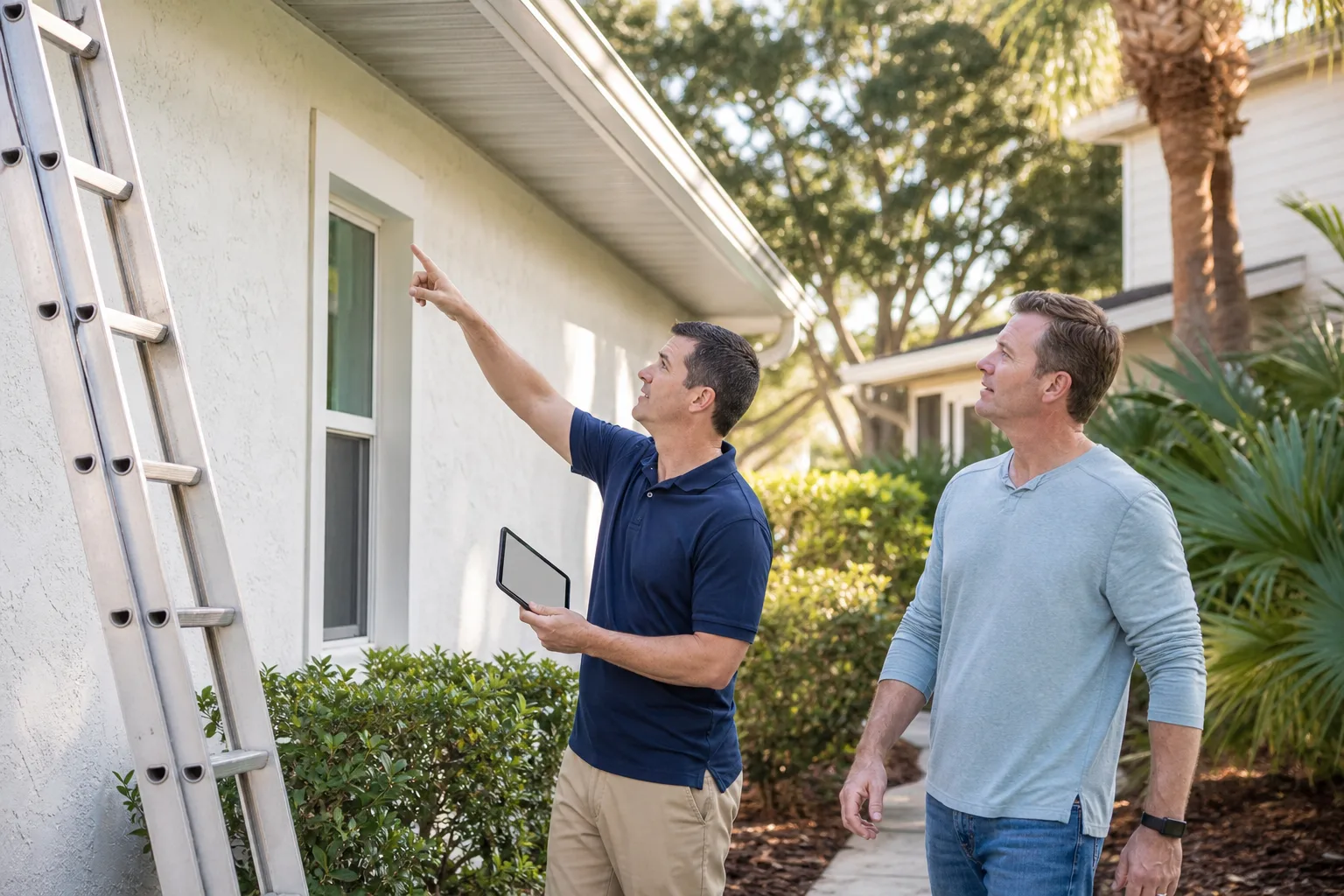
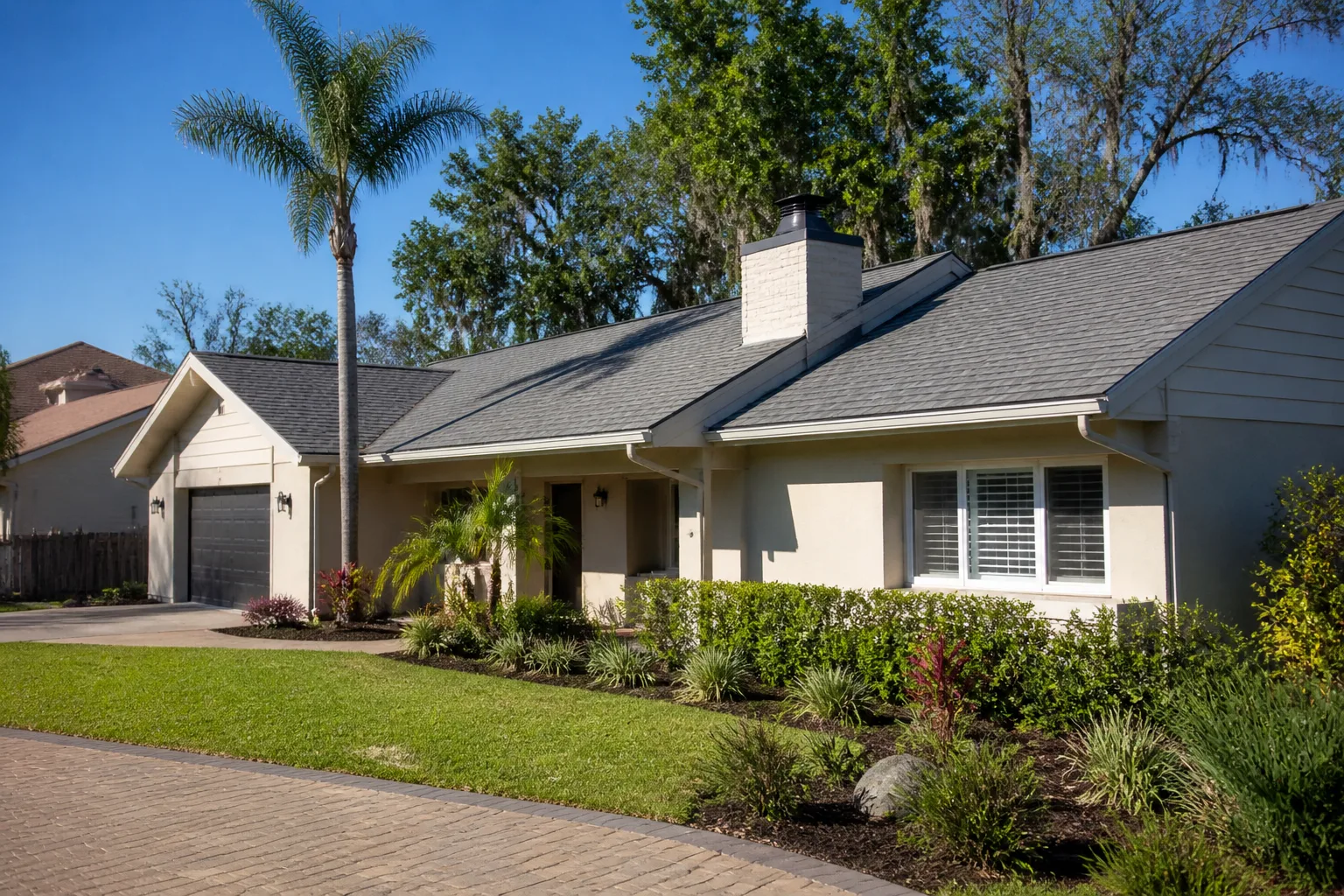
- Roof surface and edges. Look for lifted or missing shingles, deteriorated sealant at valleys, and loose edge flashing. From the ground with binoculars is enough for a first pass; don’t walk a wet or steep roof yourself. If anything looks suspect, a roofing professional should assess it.
- Exterior fasteners and attachments. Check gutter hangers, fascia, soffit panels, shutter anchors, and anything mounted to the walls. Wind failure usually starts at a fastener, not in the middle of a panel.
- Windows and doors. Confirm seals are intact, weatherstripping compresses, and frames aren’t warped. This is also the moment to confirm your impact windows and doors operate and latch properly. Impact-resistant products from PGT and Therma-Tru are only as good as their installation and hardware.
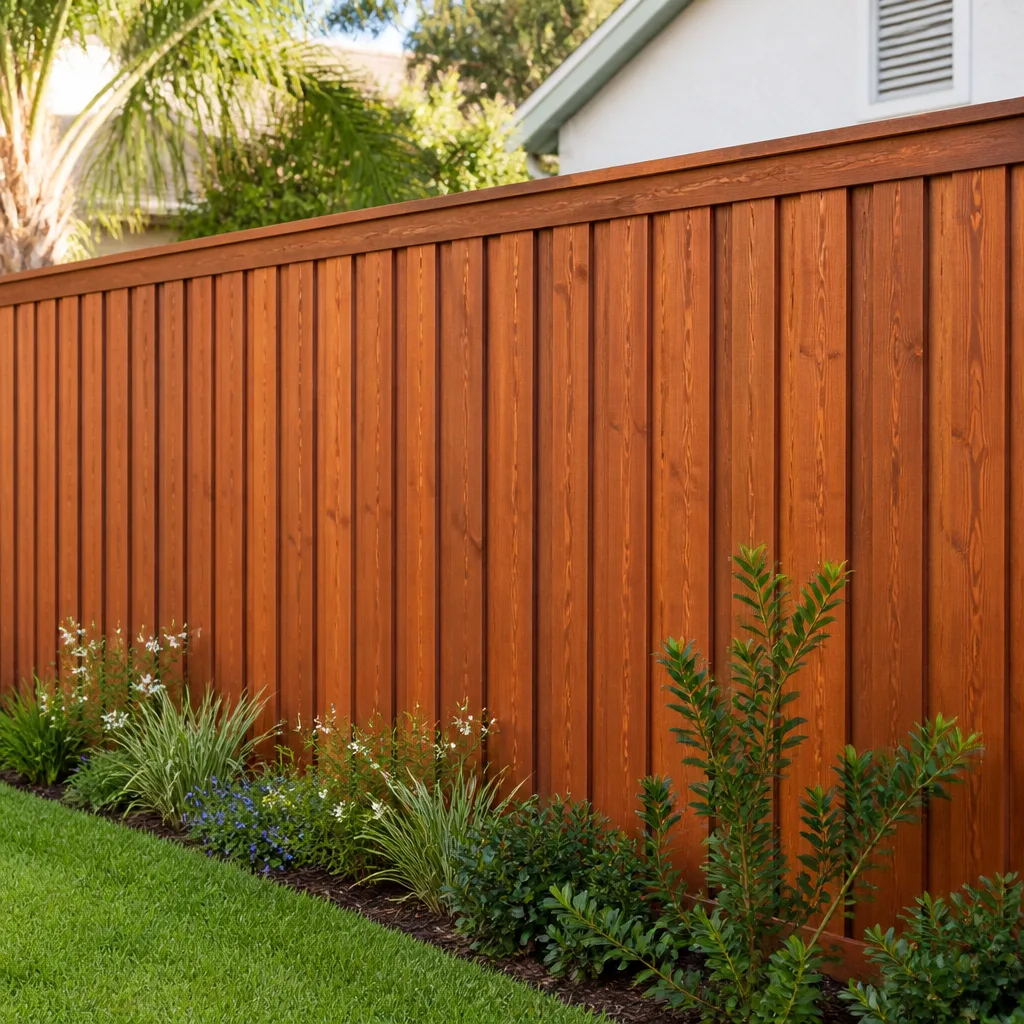
- Fencing. Push-test posts and gates. Bracing and gate hardware are common weak points. If you’re replacing, brands like Master Halco, Ameristar, and Barrette offer options for different wind exposures and aesthetics – sized to what your property actually needs.
- Driveway and drainage. Clear debris from channels and low spots, and confirm runoff travels away from the house. Paver fields should be checked for rutting or settlement.
- Gutters and downspouts. Last but not least. See the next section for why.
Do this sequence in May, before the rains settle in, and you’ll have time to act on what you find. Most cities require a permit for structural repairs and replacements, so confirm requirements with your local building department before work begins, and make sure any contractor you hire pulls the permits.
Gutters and Downspouts: The Failure Nobody Sees Coming
If you do only one maintenance task all year, make it a gutter and downspout flow-test. Blocked or disconnected drainage is the single most expensive failure pattern in Kendall homes, because it routes water against the foundation instead of away from it. You won’t see the problem from inside the house until it’s already caused damage.
A flow-test is simple in concept. Run water into the gutter at the high end and watch what comes out the downspout at the low end. What matters:
- Flow, not just drainage. Water that pours over the gutter lip or backs up at a seam is a failure even if some reaches the downspout.
- Outfall direction. Downspouts should discharge away from the foundation, into a splash block or drainage channel. Water that dumps at the wall is working against you.
- Downspout connections. Joints that have pulled apart, or underground lines that have collapsed, show up as water pooling at the base of the downspout.
- Hanger integrity. Sagging gutters hold standing water and pull free under load. This is a fastener issue, as noted in the inspection sequence.
In Kendall, UV exposure and heavy rain bursts age gutter sealants faster than in drier climates, so check the flow at least twice a year, at the start of hurricane season and again after it. Combine the check with a visual of the roof edge while you’re up there, since the two fail together more often than not. If your drainage problems trace back to how water moves across a paver driveway or patio, an experienced paver professional can solve it. For a whole-property view, connect it to fence and roof decisions before you start spending – which is what Kendall Construction Co is built to do.
Why October Through December Is Prime Concrete, Paver, and Stucco Time
Timing exterior work to the calendar isn’t only about convenience; it’s about how materials behave. Concrete, mortar, stucco, and paver set-bed materials all need working time and a controlled cure. High humidity during the wet season slows surface drying and can affect adhesion. Lower humidity in the fall and winter months gives you longer, more predictable cure times.
The practical windows for exterior work:
- Concrete and paver work (optimal October through December). Installation and curing proceed more predictably, and paver joints set more evenly. This is planning time for driveway and hardscape replacement.
- Stucco repair and painting (optimal October through March). Coatings cure and bond better when the air is drier, and painters don’t fight afternoon downpours.
- Fence installation (optimal fall and early spring). Post setting in drier soil is easier, and fence hardware and finishes are more stable through installation.
- Roofing replacements (best scheduled in the dry months). South Florida roofing must meet wind-load requirements set by the Florida Building Code. That’s a big reason to use an installer who knows the wind requirements and how to document installation. GAF, CertainTeed, and Owens Corning systems all offer options that meet the applicable wind requirements, and the install is what makes them perform.
If a project is on your list, the dry months are the time to do it. Book early – contractors fill up. And if a paver field or concrete slab is lifting or settling, address it before the next wet season compounds it. See how a planned fence installation or hardscape refresh fits the dry-season calendar.
Dry Season Inside vs. Outside: How Humidity Changes Your Schedule
Dry-season humidity helps exterior projects by giving materials a longer working window. It helps interior projects differently: the space is more stable, which matters because a lot of interior finishes – flooring, custom cabinetry, tile adhesives, paints – react to moisture in the air. If you’re planning the kitchen or bathroom your home needs, schedule it in this window. (Dry season also means more consistent moisture content in wood for millwork and cabinets.)
A few scheduling notes:
- Cabinetry and finish installation: The dry months are ideal. Cabinet lines like KraftMaid and Wellborn, and stone surfaces from Cambria, Silestone, or Caesarstone, install cleanly when the space is closed up against the weather. Sources and brands are matched to your choices.
- Interior painting and trim: Drier air speeds cure and reduces sagging and gaps at trim joints.
- Fixtures and plumbing: When fixtures like Kohler, Moen, Toto, or Grohe are being installed, schedule during the dry window so the system can be tested and confirmed without storm-driven schedule interruptions.
- Waterproofing and tile: Schluter Systems products are designed for wet-area performance. Installation during stable indoor conditions protects the integrity of the membrane.
And because all of it is connected, the same dry-season window that supports interior work is when exterior drainage and roof repairs are best planned. If you’re considering a larger addition, such as an ADU or modular expansion through prefab platforms like Abodu, Dvele, or Boxabl, this is the season to see how it fits your lot.
The Month-by-Month Maintenance Calendar
This calendar is calibrated to South Florida’s actual pattern. Some items are annual, some repeat, but each month’s assignment is the highest-value task for that stretch of year in Kendall.
- January: Dry-season exterior work. Stucco and paint touch-ups, patio and driveway sealing, window and door seal inspection.
- February: Interior project season. Bathrooms, kitchens, trim, and any work that benefits from lower humidity. Confirm all permit requirements with your local building department before starting.
- March: Plan roof and exterior improvements before the spring booking rush. Verify roofline, valley flashings, and fascia.
- April: The pre-season fastener check. Tighten or replace what moved over the winter, and confirm gate and fence hardware.
- May: Full pre-hurricane inspection sequence (roof, fasteners, windows, fence, driveway drainage, gutters). Act on any problem this month.
- June through August: Wet season. Monitor for interior leaks, recheck gutters after major rain, and keep drainage clear. Avoid scheduling curable exterior finish work in these months if you can.
- September: Hold tight. Inspect after storms, document what you see, and plan repairs for the post-season window.
- October through December: The high-ROI repair window. Fix what the season exposed – roofing repairs, fencing, pavers, concrete, and stucco all work best now.
Set recurring reminders for the May inspection and the October post-hurricane walk. Even a simple calendar reminder gets much of the benefit.
One Contractor, Every Trade: Coordinating the Whole Envelope
The maintenance calendar above keeps surfacing the same truth: the roof, fence, driveway, windows, doors, and interior finishes fail in sequence, not in isolation. Water that starts at a roof edge flows into a gutter, past a fence line, across a paver driveway, and against a foundation. Wind that loosens a window seal stresses a door frame and a fence panel. When you hire those repairs separately, you own the coordination. When one contractor handles more trades, the work downstream from the first problem is easier to solve.
That is the reason we carry a curated roster of 50-plus name-brand product lines across roofing, windows, doors, pavers, cabinetry, countertops, fencing, and prefab ADU platforms instead of pointing you in eight directions. From GAF and Owens Corning roofing systems to PGT impact windows, James Hardie siding, Belgard pavers, and Master Halco fencing, the same company that assesses your roof edge can also handle the fencing and hardscape it touches. Homeowners get to choose materials by brand and finish level, not by which contractor is available.
For larger projects, our home additions & ADU capability comes through prefab brands like Abodu, Dvele, Boxabl, Plant Prefab, and Mighty Buildings – platforms that allow the same single relationship to extend into an addition that most remodelers can’t coordinate. It’s one way of looking at maintenance: protecting what you have, and building what comes next, as the same job.
Common Mistakes to Avoid
- Using a northern maintenance template. Raking leaves and winterizing pipes in Kendall wastes your time and misses the storm-related tasks that actually matter. Build your calendar around the hurricane season and the dry window.
- Skipping the gutter flow-test. It’s the cheapest inspection on the list and prevents the most expensive failure type – water against the foundation. Do it twice a year.
- Scheduling exterior work in the wet season. Concrete, pavers, and stucco cure less predictably with high humidity and rain. Use the dry months for work that depends on adhesion.
- Treating inspection and repair as one step. If you book a contractor to “come look and fix,” you may end up fixing what happens to be visible. Do the season inspection first, then schedule repairs.
- Forgetting the fasteners. Most wind failures start at a loose fastener, not a broken panel. Check hangers, anchors, and hardware in May.
- Choosing materials without a multi-trade plan. A roof replacement that doesn’t consider drainage and fascia, or a fence that ignores runoff across a paver driveway, leaves gaps. Coordinate the trades that touch each other.
- Skipping permits because the work looks small. Confirm permit requirements for any structural repair or replacement with your local building department. Unpermitted work can cost more at resale than the job itself.
See the difference
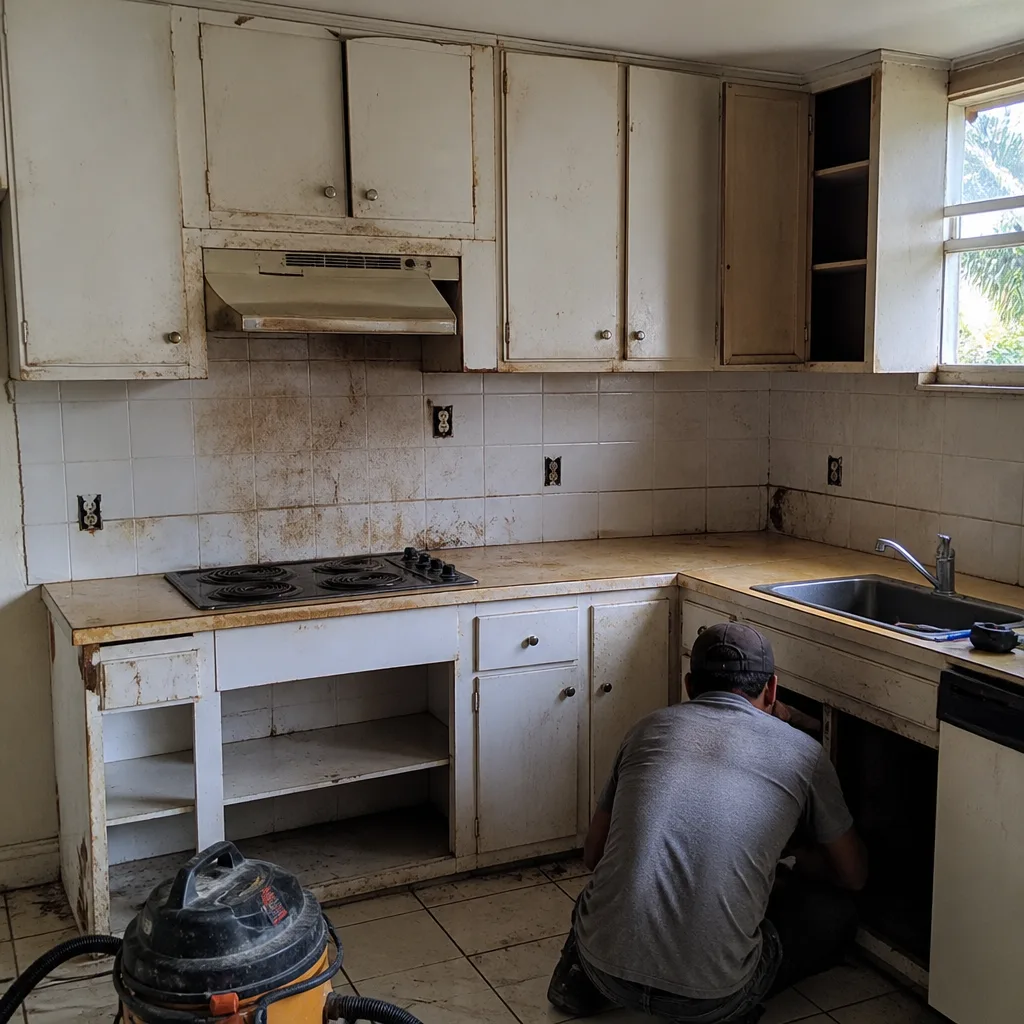 Before
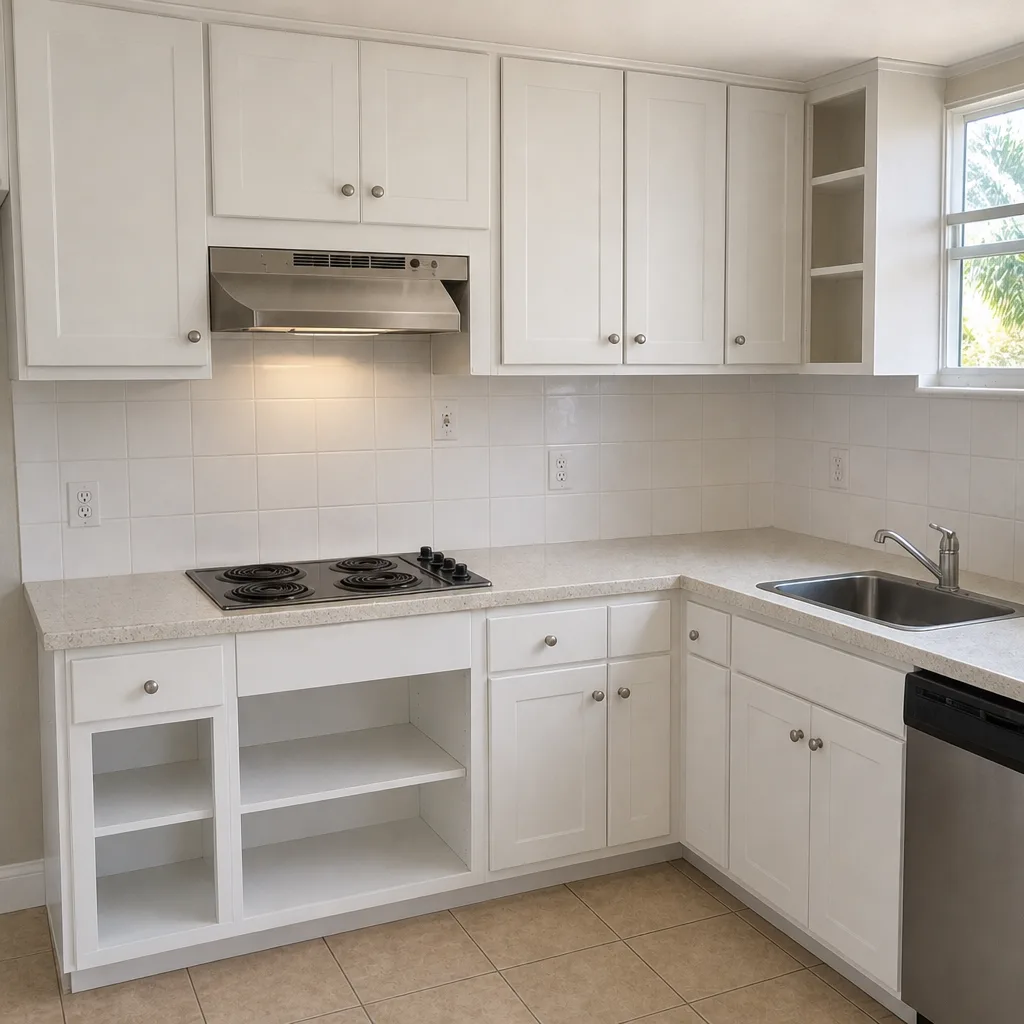 After
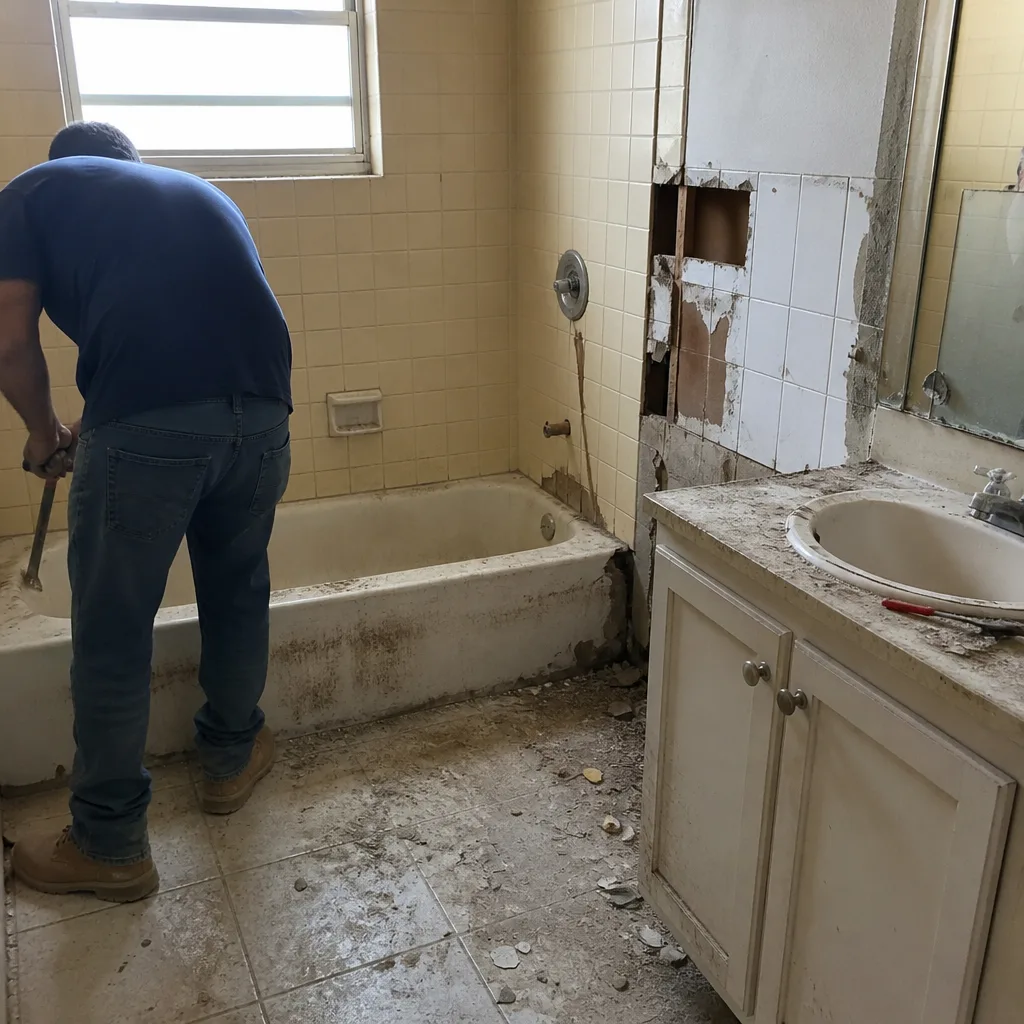 Before
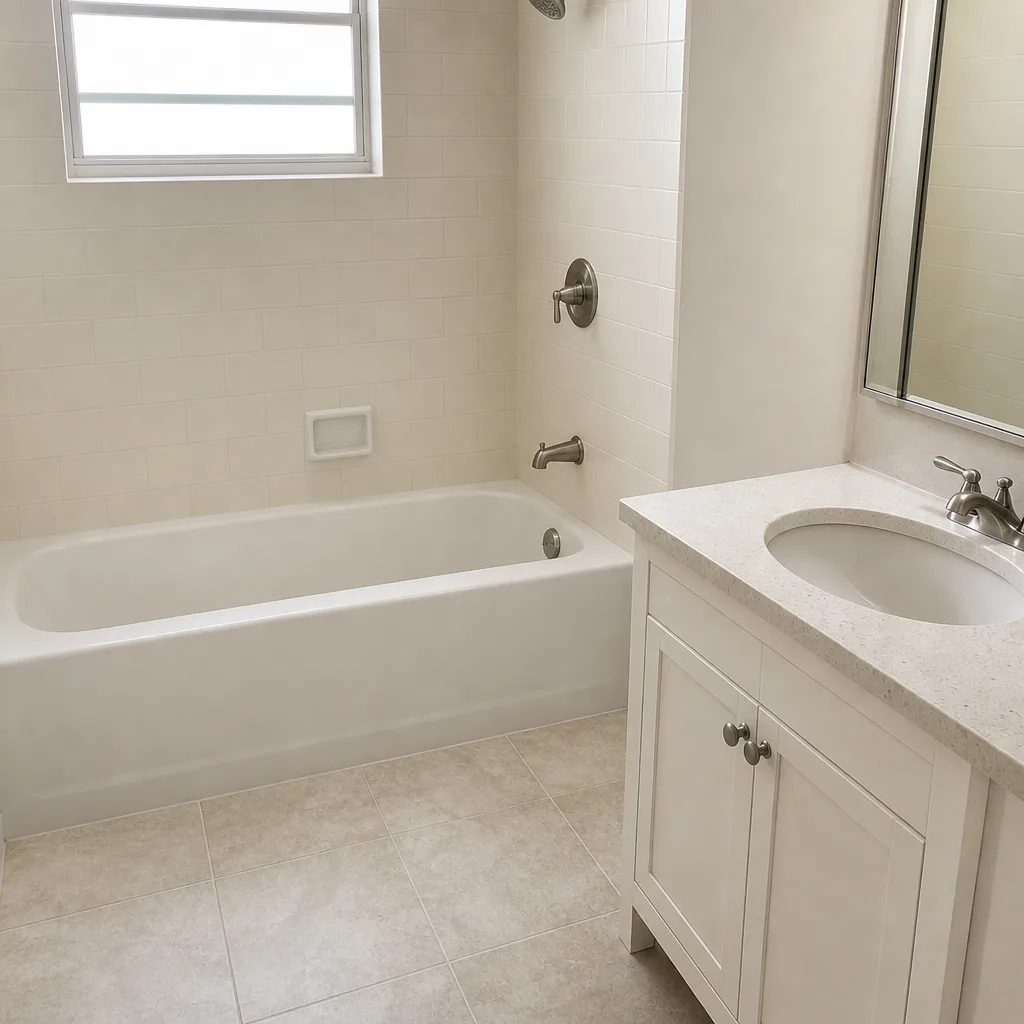 After
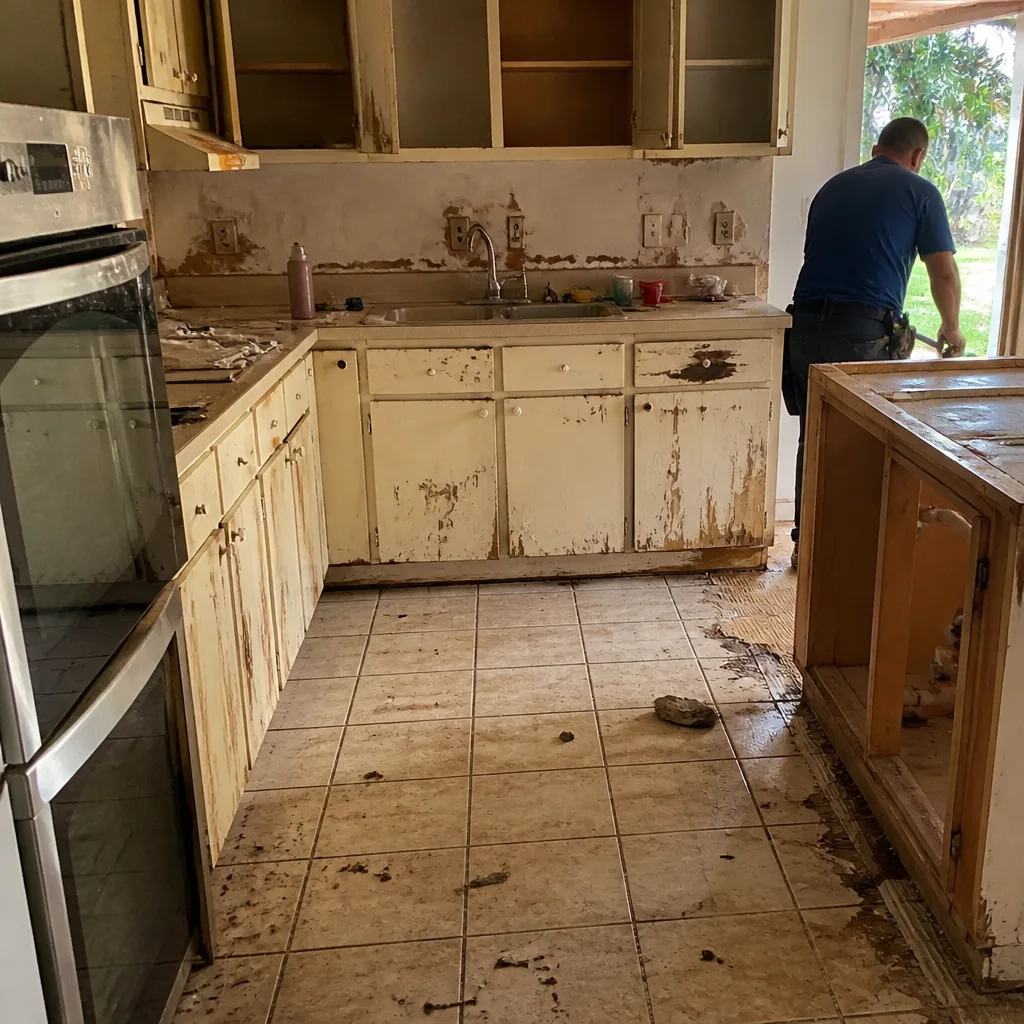 Before
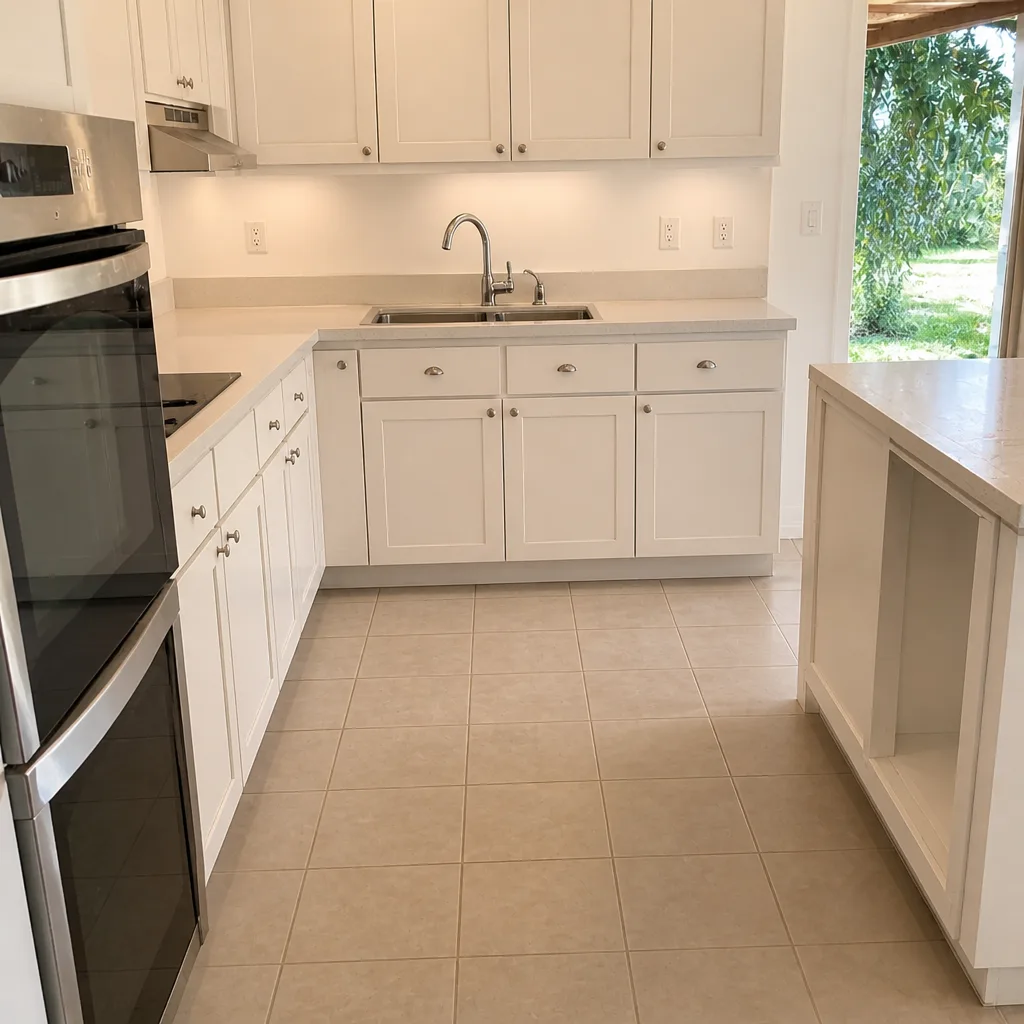 After
When to Call a Professional
Some tasks belong on your calendar and some belong with a licensed professional. Call us when a roof edge lifts, sealant fails in repeated spots, or shingles are missing; those are wind-load concerns closely tied to the Florida Building Code. Call when a fence post or gate no longer holds under a push-test, when a paver field is settling and pooling water, or when stucco cracks are wide enough to let water behind the wall. Call if gutters can’t be made to drain after clearing, if impact windows or doors don’t latch and lock, or if the dry-season inspection turned up more than a cosmetic problem.
Kendall Construction Co offers free estimates in Kendall – call (888) 300-8968. We answer 24/7. Fast dispatch from 7am to 7pm, Sunday through Friday.
Frequently Asked Questions
Gutter and downspout flow-testing twice a year, before and after hurricane season. Blocked or disconnected drainage routes water against the foundation, which is the most expensive failure pattern in Kendall homes and the easiest to prevent. After the flow-test, the next priority is the May pre-hurricane inspection sequence covering roof, fasteners, windows, fence, and driveway drainage.
The dry months from late fall through early spring. Roof work goes more predictably when the weather is stable, and a professional can confirm the installation meets wind-load requirements. Roofing replacements are best scheduled well ahead because the dry-season window fills up quickly. Roofing is dangerous work at height, so always use a trained professional rather than attempting it yourself, and confirm permit requirements with your local building department. Call us for a free estimate.
Lower humidity gives concrete, mortar, and stucco a longer, more predictable working time and better adhesion. In the wet season, high humidity and rain can disrupt curing and surface finish. October through December is the strongest window for paver, concrete, and stucco projects in Kendall. Scheduling them in the dry months protects the quality of the finished work.
At least twice: once before hurricane season (May) and once after the season ends (October). Push-test fence posts and hardware, and walk the driveway and perimeter after rain to find low spots and pooling. If you find movement or settlement, address it before it compounds in the next season. Call (888) 300-8968 for an exact quote – estimates are free.
Yes, and the dry season serves both. Exterior work benefits from lower humidity for curing; interior work benefits from a more stable, moisture-controlled space for cabinets, tile, and finishes. Both fit well in the dry-season window. Do interior projects with an eye on permit requirements and the dry-season calendar. Call us to schedule a free estimate and line up the next dry-season project.
It depends on the scope. Cosmetic maintenance usually doesn’t require a permit, but structural repairs and replacements often do. Confirm requirements with your local building department before work starts. Any licensed contractor you hire should pull the required permits. We handle permit coordination as part of the project scope. Call (888) 300-8968 and we’ll tell you what the job likely needs.
The Bottom Line
Kendall living means planning around two seasons, not four. The dry-season window – from hurricane season’s end into spring – is the highest-ROI stretch of the year for maintenance and improvement. Use the May pre-hurricane inspection sequence to protect your roof, fencing, driveway drainage, and fasteners as one connected system. Never skip the gutter and downspout flow-test; it’s the cheapest safeguard against the most expensive failure. And when a repair is beyond a weekend task – roofing, structural fencing, stucco, or any work that requires a permit – bring in a professional. Protect what you have, and build what comes next.
Call (888) 300-8968 for a free estimate. We answer 24/7. Fast dispatch from 7am to 7pm, Sunday through Friday. Our technicians have up to 14 years of experience, the work is licensed and insured, and every job comes with a written line-item quote so you know the price before work begins.
Written by the team at Kendall Construction Co.