Last updated November 18, 2026

Free written scope consultation - allowances, timeline, and change-order rules on paper before a single trade is scheduled
The Complete Driveway & Pavers Guide for Kendall Homeowners
Most paver failures in South Florida aren’t a materials problem. They’re a base compaction problem, caused by installers who spec a driveway the way you’d spec one in Georgia and then wonder why it heaves and sinks two rainy seasons later. Kendall sits on a marl and clay mix that behaves nothing like the sandy soils most national installation guides were written around. Add hurricane-season rain loads, a county permit process with real teeth, and HOAs that review your paver color before a single stone goes down, and you have a set of constraints nobody’s generic paver guide addresses. This guide does. You’ll learn how deep the base really needs to be in Kendall, how to slope a driveway so water reaches the street instead of the slab, which materials hold up under South Florida heat and UV, and what Miami-Dade County will ask of you before you break ground.
Quick Answer
A paver driveway in Kendall needs a compacted base deeper than the national spec calls for, correct cross-slope toward the street for drainage, HOA approval of your color and pattern before ordering, and a Miami-Dade County permit where the work touches the right-of-way or changes the driveway footprint. Travertine, concrete pavers, and permeable pavers each suit different lots and budgets; the right pick depends on sun exposure, vehicle load, and how your HOA reviews hardscape. Get the base, the sand, and the slope right the first time and the surface will outlast the house’s next roof.
Styles & brands we work with
- Kitchen remodeling
- Bathroom remodeling
- Home additions & ADU
- Roofing
- Windows & doors
- Driveway & pavers
- Fence
Table of Contents
- Why Kendall’s Soil Changes the Whole Calculation
- How Deep Does a Paver Base Need to Be in Kendall?
- Getting the Slope Right for South Florida Rain
- Travertine vs. Concrete vs. Permeable Pavers
- The Kendall HOA Approval Checklist
- Permits, Inspections, and the Stop-Work Trap
- What Paver Work Typically Costs
- Repairs, Resanding, and Long-Term Care
Why Kendall’s Soil Changes the Whole Calculation
Kendall’s ground is a mix of marl and clay, and that combination is the single biggest reason paver driveways fail here. Clay expands when it holds water and shrinks when it dries. Under a driveway, that movement is relentless, and it transfers straight up into a base layer that wasn’t built to absorb it. National installation specs are written for stable, well-draining subgrades, which is not what most Kendall lots offer.
Marl, the calcium-rich sediment common across western Miami-Dade, adds its own wrinkle. It drains poorly and can soften when saturated, which means a base that looks solid in the dry season can lose support during a stretch of summer storms. The fix isn’t exotic. It’s a deeper, better-compacted aggregate base, proper geotextile separation where the subgrade is unstable, and enough patience to compact in lifts rather than all at once.
What we see in the field, again and again:
- Shallow bases installed to a national four-inch spec that perform fine up north and fail in Kendall’s clay.
- Single-lift compaction where six inches of aggregate goes down at once and only the top two inches ever get compacted.
- No separation fabric between fine subgrade and coarse base, so clay migrates up into the aggregate and the base loses its structure.
- Poor edge restraint, letting the whole field spread outward under vehicle load.
None of that is a product flaw. It’s a soil-flaw decision made at the design stage. If you’re comparing contractors, ask what base depth they recommend for marl and clay and how they compact it. The answer tells you more than any brochure.
How Deep Does a Paver Base Need to Be in Kendall?
For most Kendall driveways carrying passenger vehicles, a compacted aggregate base of six to eight inches is the working range, deeper where the subgrade is soft or the driveway takes heavy trucks. National guides often call for four inches. That number comes from stable soils and doesn’t hold up here.
Base depth is only half of it. Compaction is the other half, and it’s where shortcuts hide. Here’s how a proper base goes down, step by step:
- Excavate to full depth. Remove existing concrete, old pavers, and enough soil to fit the base plus the bedding layer plus the paver thickness. Skimping here means a driveway that sits proud of the garage slab.
- Proof-roll and evaluate the subgrade. A vibratory roller pass reveals soft spots. Any that show up get excavated and replaced, not paved over.
- Install separation geotextile where the subgrade is fine-grained, so clay doesn’t pump up into the aggregate.
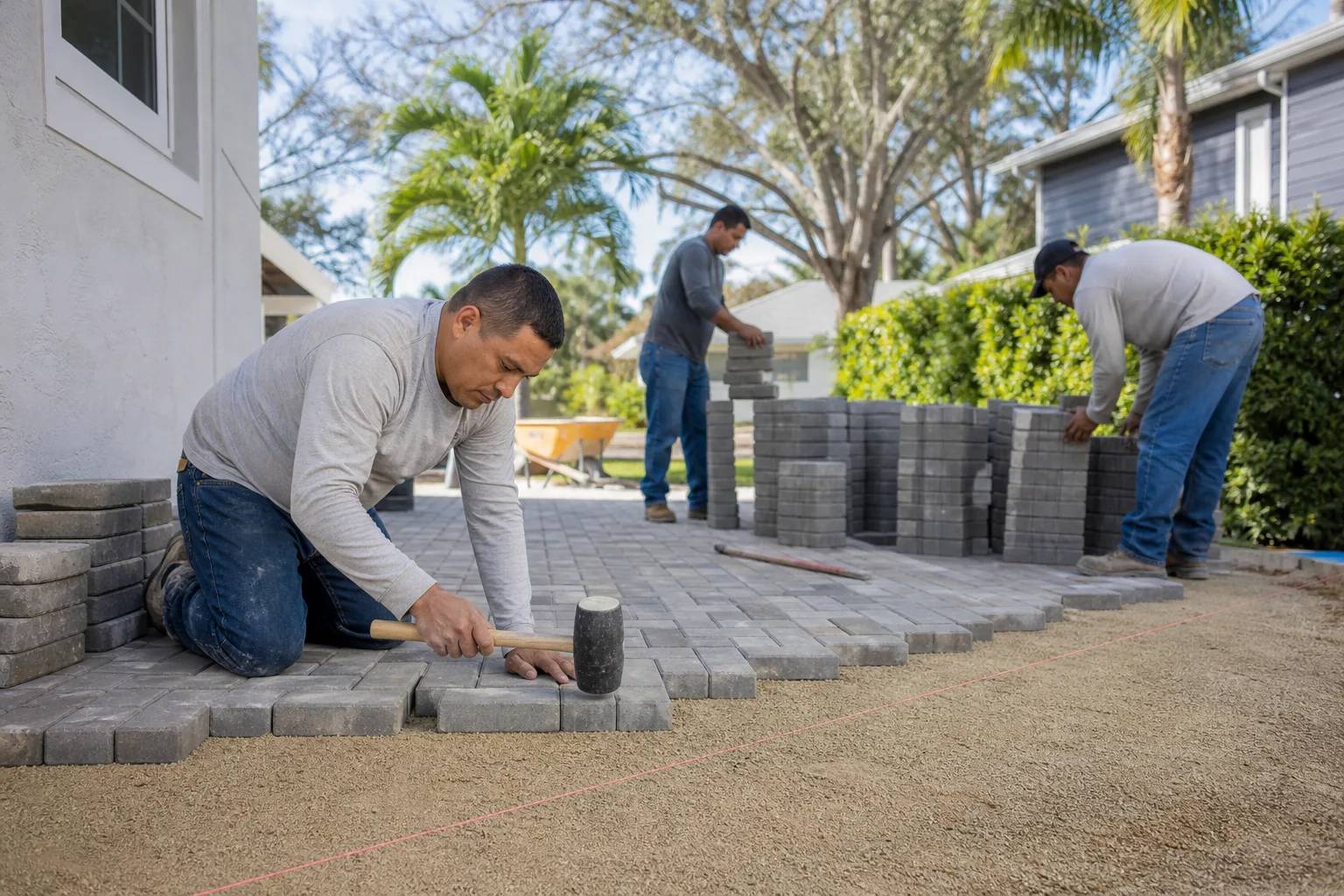
- Place aggregate in lifts of two to three inches and compact each lift before the next goes down. This is the step that separates a driveway that lasts from one that settles.
- Check grade and slope as you build, not after. Correcting slope in a finished base is far more expensive than doing it right.
- Set edge restraints on a concrete-haunched edge so the field can’t spread.
- Screen the bedding sand to a uniform thin layer, then lay pavers, compact again, and fill joints.
Two things worth asking any installer in Kendall: how thick each lift is, and what equipment they use to compact it. If the answer is a plate compactor on a single six-inch lift, the base won’t perform. Our technicians have up to 14 years of experience, and the difference between a base built in lifts and one built in a single pass shows up within two wet seasons.
Getting the Slope Right for South Florida Rain
Kendall gets its rain in concentrated bursts, and a driveway that drains slowly becomes a driveway that ponds, stains, and undermines its own base. The goal is simple: water should move off the pavers and toward the street or a designed drainage point, never sit on the surface or soak under the slab.
Cross-slope is the workhorse here. A typical target is roughly a 1 to 2 percent slope away from the garage and toward the street or a swale, which translates to about an eighth to a quarter inch of fall per foot. Flat is not a design choice. It’s a slow leak.
South Florida Water Management District rules and Miami-Dade County review care about where stormwater goes, especially on lots near a swale, canal, or conservation area. If your driveway replacement changes how water leaves the property, expect the plans reviewer to ask. In practice:
- Pitch away from the structure. The garage slab should be the high point, with water running out and away.
- Respect the swale. Many Kendall lots drain to a swale at the front. Don’t fill it or block it; the county and neighbors notice.
- Plan for a channel or trench drain if the driveway runs to a low point with nowhere to go.
- Use permeable pavers where the soil and site allow. They hold and infiltrate water rather than shed it, which can simplify drainage on tighter lots.
We’ve seen driveways where the pavers themselves are fine but the grade is wrong, so every heavy rain leaves a puddle against the garage. That’s a design failure, not a maintenance problem, and fixing it means lifting the field, re-grading, and resetting.
Travertine vs. Concrete vs. Permeable Pavers
The material choice drives everything downstream: budget, maintenance, how hot the surface gets underfoot, and how your HOA reviews it. Three options dominate Kendall conversations, and each has a clear role.
- Travertine: Cool underfoot, elegant, and a strong fit for pool decks and driveways on higher-end lots. It resists heat well, which matters in Kendall’s summers. It’s the priciest of the three and needs a properly built base because it’s less forgiving of movement.
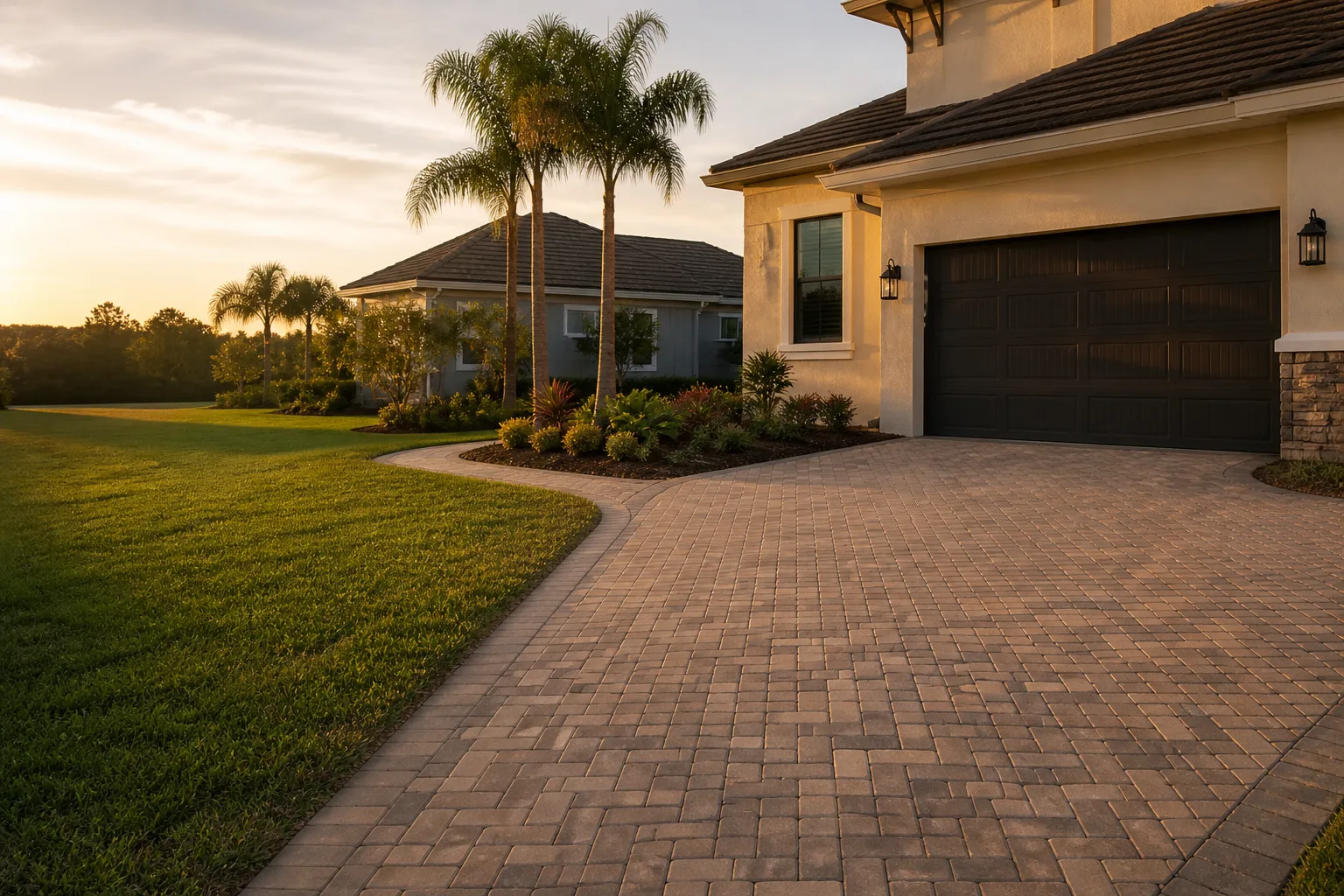
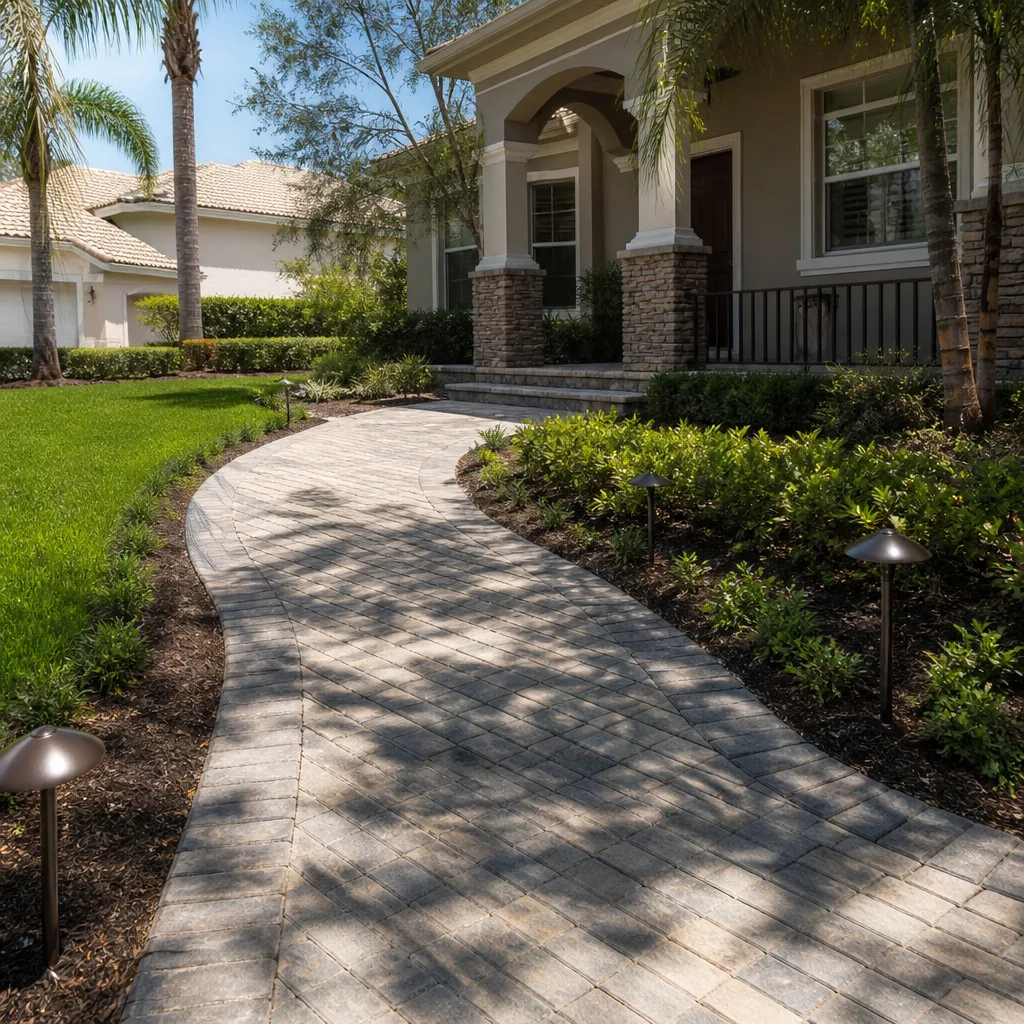
- Concrete pavers: The workhorse. Durable, repairable, and available across a wide range of colors and patterns through lines like Belgard and Techo-Bloc. Under South Florida UV, lighter colors stay cooler and fade less noticeably. Concrete pavers handle vehicle load well and are the most common choice for Kendall driveways.
- Permeable pavers: Designed with wider joints or open cells so water passes through into a stone reservoir below. A smart pick for lots with drainage constraints or homeowners chasing a more water-friendly site. They need proper design and periodic cleaning to keep infiltrating.
On heat and UV: lighter tones reflect sun and feel cooler in bare feet, darker tones absorb heat and can be uncomfortable in July. On long-term care, concrete pavers are the easiest to repair, since individual units can be lifted and reset. Travertine rewards you with looks but asks for more careful installation.
A note on the salt-air question that comes up in coastal design conversations: Kendall is inland enough that airborne salt isn’t the driver of material selection it is on the barrier islands. Sun, rain, and soil movement are what matter here.
If you’re weighing these alongside other exterior decisions, the Kendall Construction Co team handles everything from the driveway out to the fence line, and we can talk through how the paver choice fits the rest of your exterior.
The Kendall HOA Approval Checklist
Many Kendall neighborhoods sit inside master-planned communities with architectural review committees, and their rules can sink a project that ignores them. Approval usually comes before you order materials, not after. Skip it and you can be told to tear out a driveway you just paid for.
Here’s the checklist we walk homeowners through before anything is ordered:
- Read the architectural guidelines. Look for approved paver colors, patterns, and any restriction on stamped or textured finishes.
- Confirm the color palette. Neutral tones, tans, grays, and warm beiges are most commonly pre-approved. Bright or heavily mixed colors usually need a variance.
- Check pattern rules. Running bond and herringbone are the most widely accepted. Custom patterns often require extra review.
- Submit the application with a sample. Most committees want a physical sample or a close-up photo and the manufacturer and product line.
- Get approval in writing and keep it with your permit paperwork.
- Note any timing rules on when work can happen, though scheduling specifics vary by community.
The single most common HOA problem is ordering pavers before approval, then discovering the color isn’t allowed. That’s an avoidable cost. If you’re not sure what your community allows, ask before you sign anything.
Permits, Inspections, and the Stop-Work Trap
Miami-Dade County requires a permit for much driveway work, particularly when it touches the right-of-way, changes the footprint, or involves new drainage. The exact trigger depends on your property and scope, so the first step is always a call to the county’s building department or a contractor who pulls permits routinely.
The stop-work trap is real. A driveway going in without the required permit can draw a stop-work order, and untangling that costs time and money. The better path:
- Confirm permit requirements with Miami-Dade County before demolition.
- Submit plans showing dimensions, base depth, slope, and drainage.
- Get HOA approval in parallel so the two processes don’t stall each other.
- Schedule inspections at the base stage and after completion where the county requires them.
- Keep the signed-off permit with your home records; it matters at resale.
Permits pulled and inspections passed is the standard we hold on every driveway. It protects you, and it protects the work. If a contractor suggests skipping the permit to save time, that’s a signal to find another contractor.
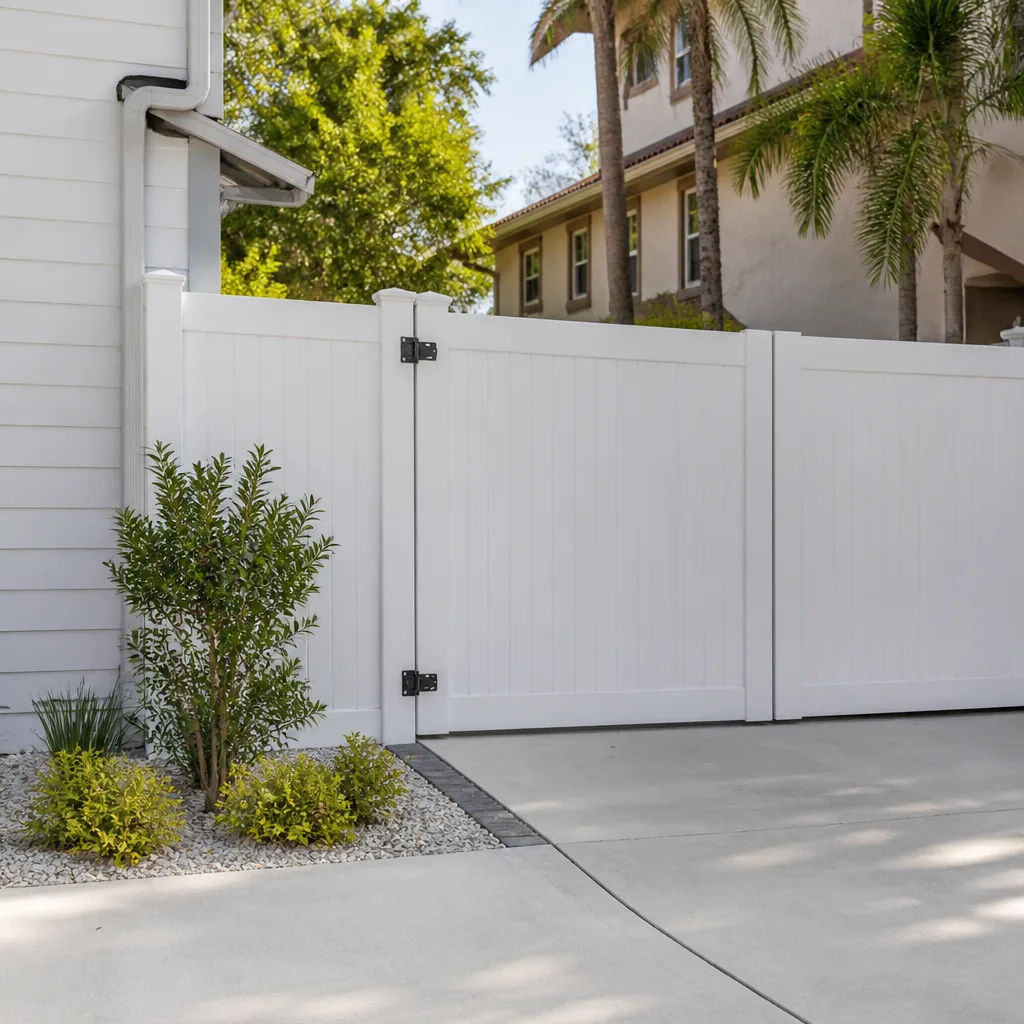
Driveway work often pairs with other exterior projects, and the same permit discipline applies to fence installation where setback and height rules come into play.
What Paver Work Typically Costs
Paver pricing in Kendall depends on square footage, base depth, material, and site access. Because we set prices per job by a written estimate, treat the figures below as typical ranges to plan around, not a quote.
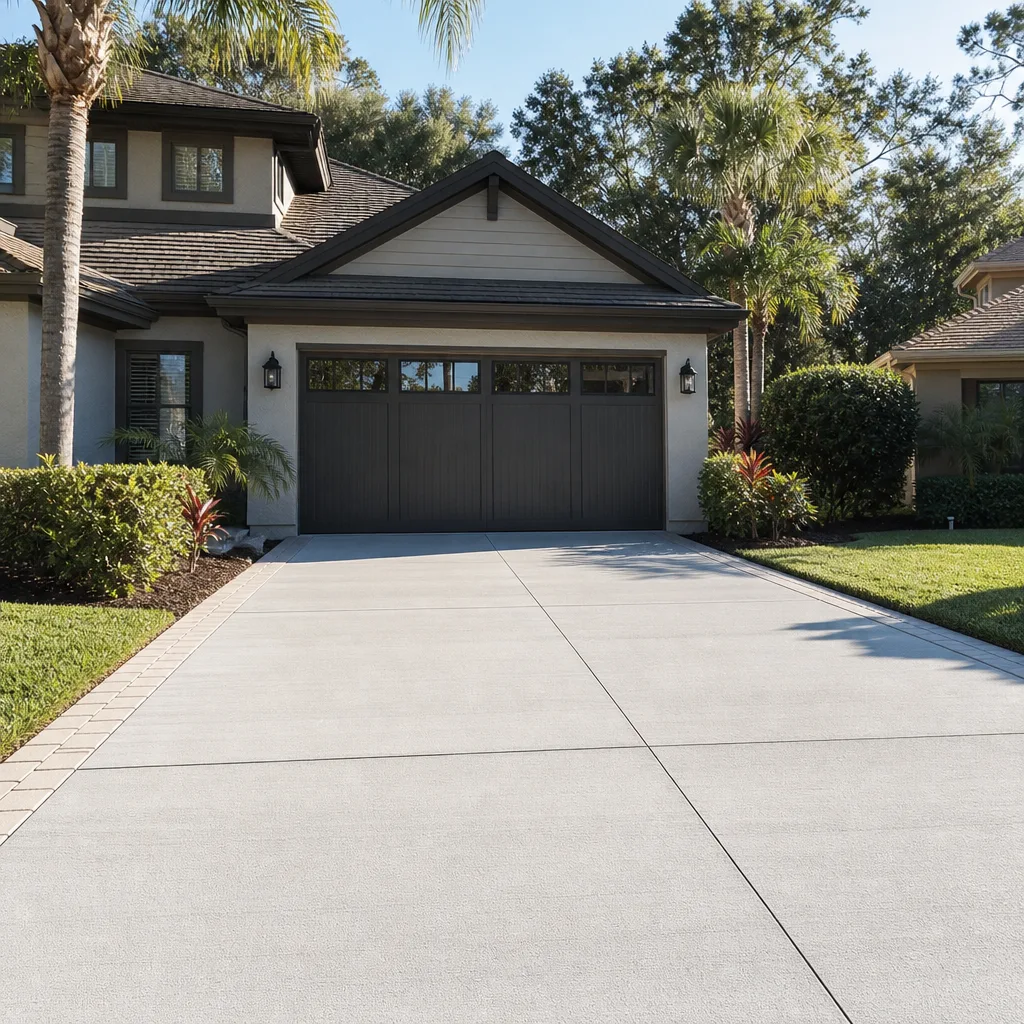
- Concrete paver driveway, installed: the most common Kendall choice, priced in the mid range for the three materials, with the final number driven by base depth and pattern.
- Travertine driveway or pool deck: the premium tier, driven by tile cost and the more exacting base and setting requirements.
- Permeable paver system: priced above standard concrete pavers because of the open-graded base and reservoir design.
- Removal and disposal of an existing driveway: an added line item that varies with thickness and access.
- Drainage additions such as channel drains or regrading: quoted separately based on the site.
Three things move the number most: base depth required by your soil, material selection, and whether demolition and hauling are included. Ask for a line-item written estimate that shows the base build, the paver product, joint sand, edge restraint, and disposal. Fixed pricing with no change orders, in writing, is what you want to see.
As a reference point on the rest of your exterior, a full roof or window project carries its own budget, and we can quote paver work alongside home additions & ADU projects so the site work is coordinated.
Repairs, Resanding, and Long-Term Care
A well-built paver driveway is largely maintenance-light, but it isn’t maintenance-free. The two things that matter most over time are joint sand and drainage. When joint sand washes out, pavers shift, weeds move in, and water gets under the surface. Re-sanding with the right polymeric or stabilized joint sand restores stability.
What routine care looks like in Kendall:
- Replenish joint sand periodically, especially after heavy rain seasons.
- Keep the slope clear so water keeps moving to the street or drain.
- Clean with a gentle approach; high-pressure washing can strip joint sand if done carelessly.
- Address settlement early. A few sunken pavers are a quick reset; a spreading depression points to a base problem.
When pavers sink across a broad area or a section stays wet after rain, that’s usually a base or drainage issue, not a surface one. A proper repair means lifting the affected field, correcting the base or grade, and resetting. That’s a job for someone who understands the soil underneath.
Common Mistakes to Avoid
- Specifying a shallow base. Copying a four-inch national spec onto Kendall’s clay and marl guarantees settlement. The base should be deeper and compacted in lifts.
- Compacting in one pass. Dumping six inches of aggregate and compacting once leaves the lower layers loose, and the driveway sinks where it matters most.
- Skipping HOA approval. Picking a color the community doesn’t allow means tearing out a new driveway. Get written approval first.
- Ignoring the permit. A stop-work order mid-project costs more time and money than pulling the permit up front.
- Getting the slope wrong. A driveway that sheds water toward the garage rather than the street will pond and undermine itself. Cross-slope is not optional.
- Choosing dark pavers for a sun-baked driveway. They absorb heat and can be uncomfortable in Kendall’s summers. Lighter tones stay cooler and hold their color longer.
- Using the wrong joint sand. Ordinary sand washes out fast in heavy rain; a stabilized sand holds up far better.
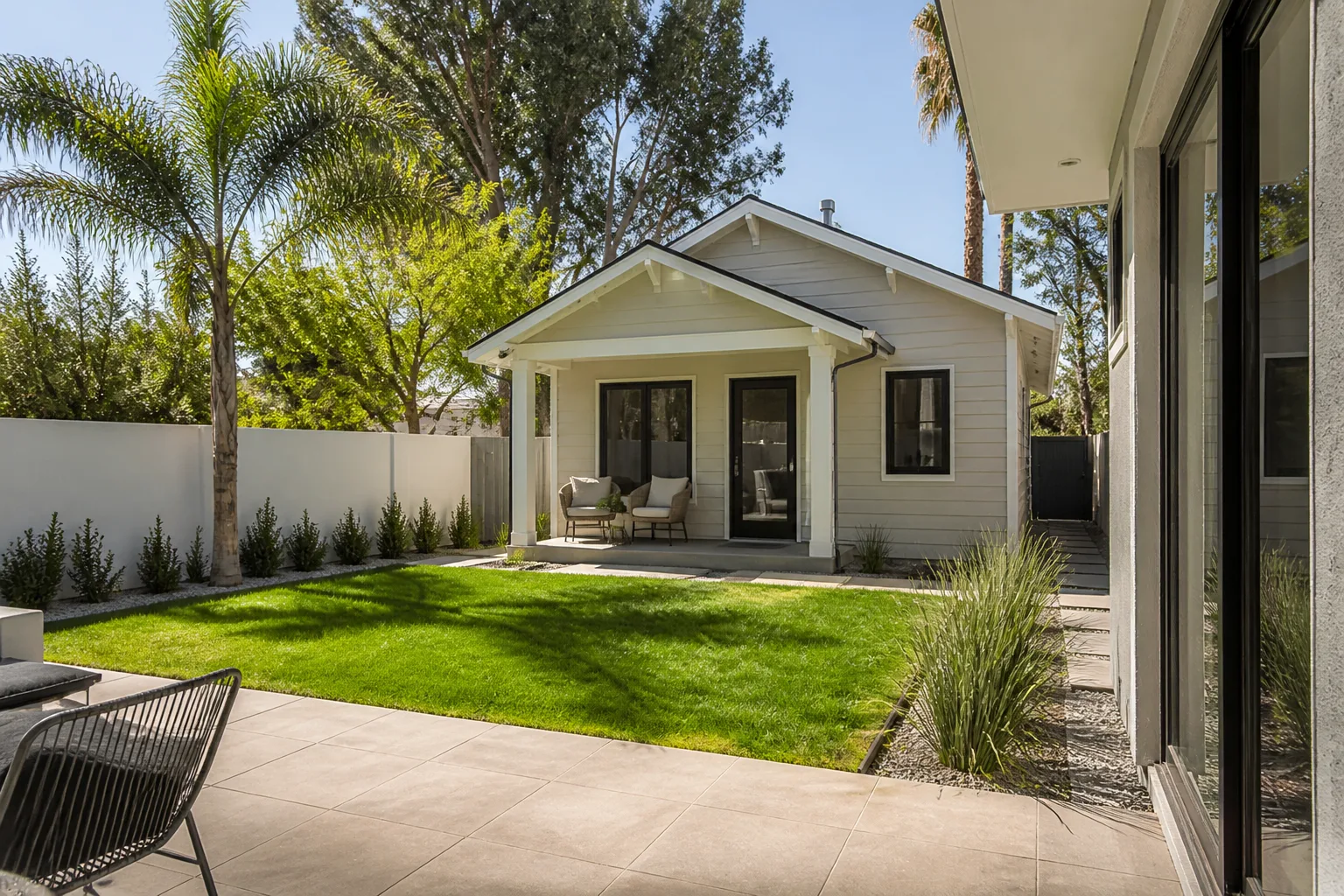
See the difference
 Before
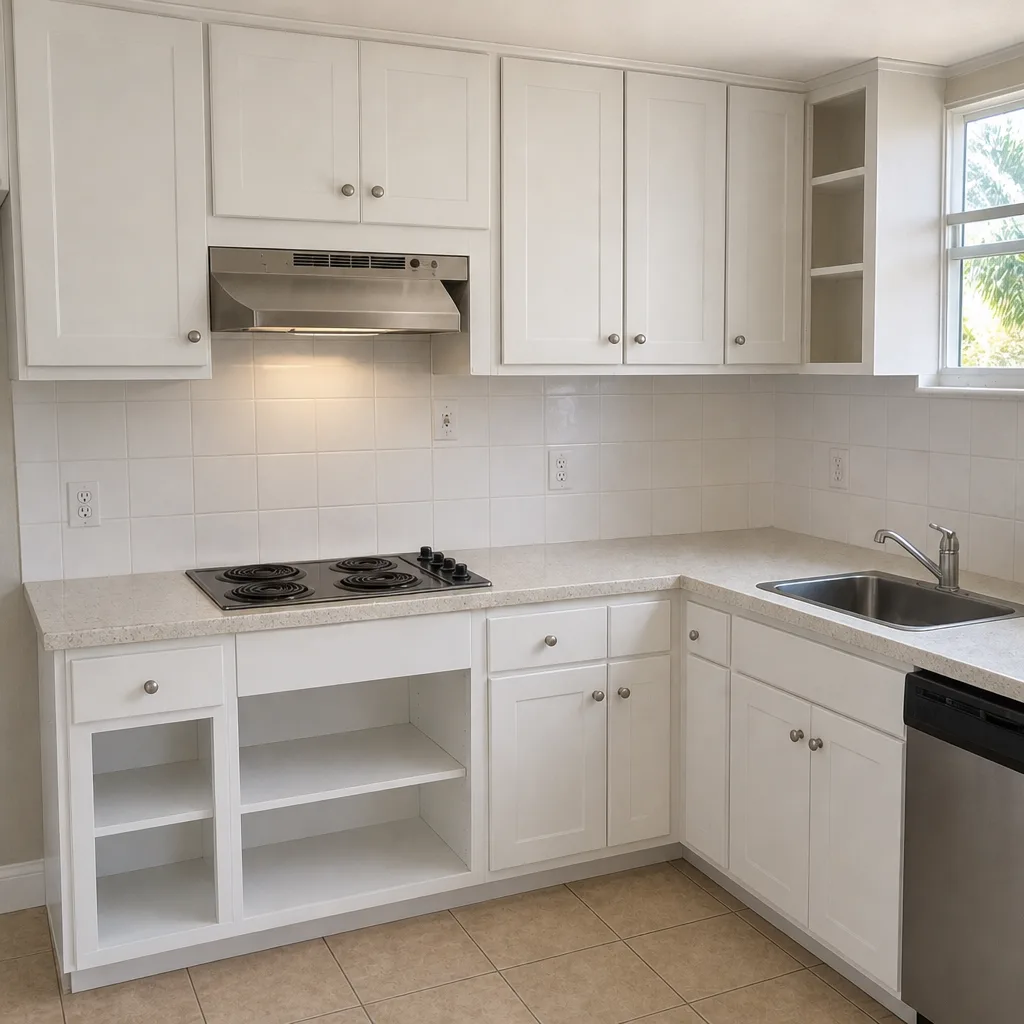 After
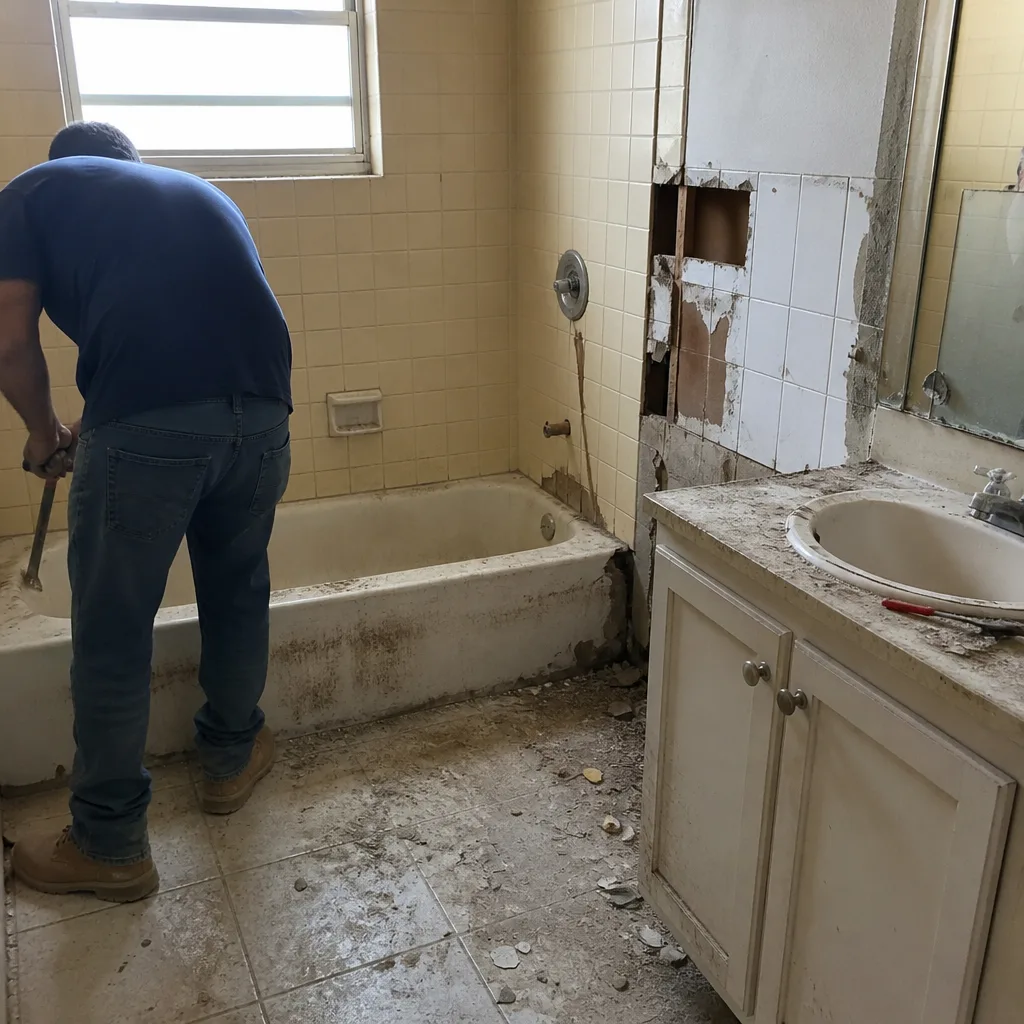 Before
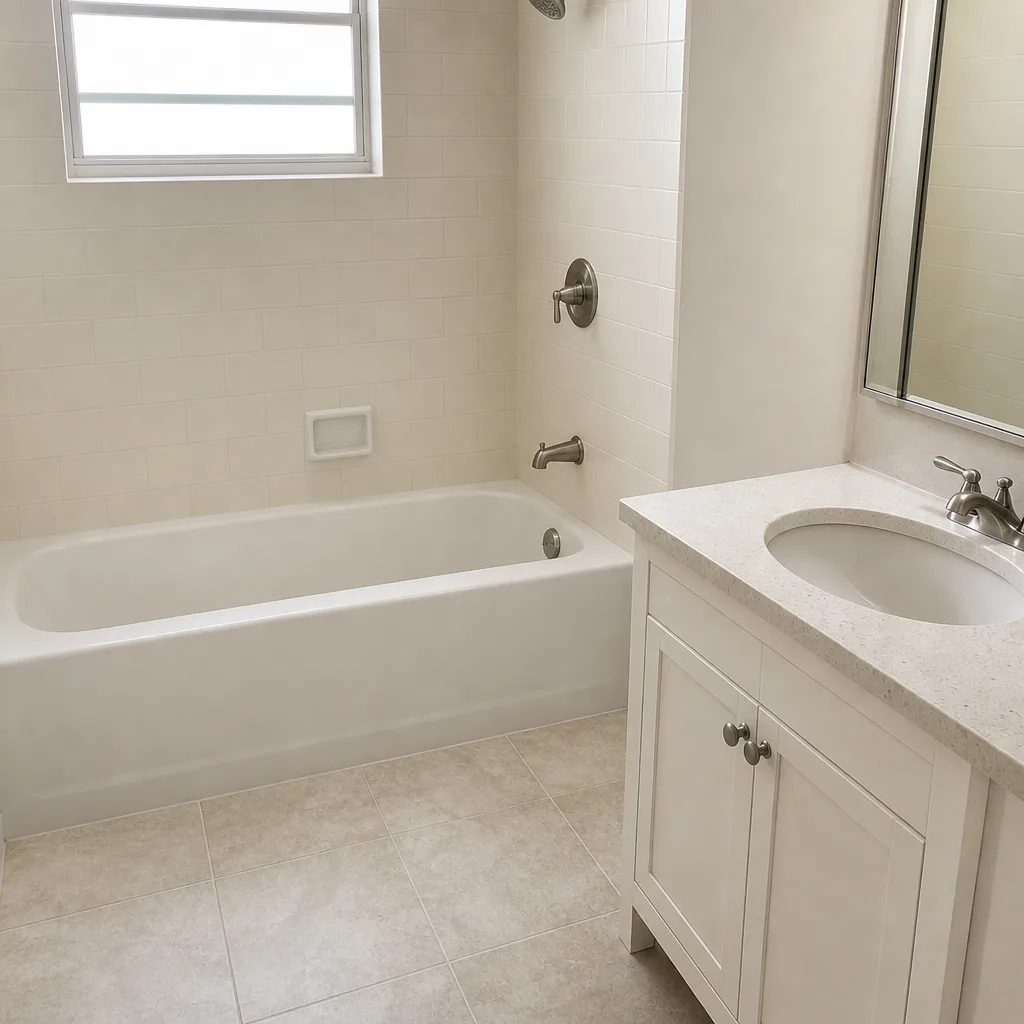 After
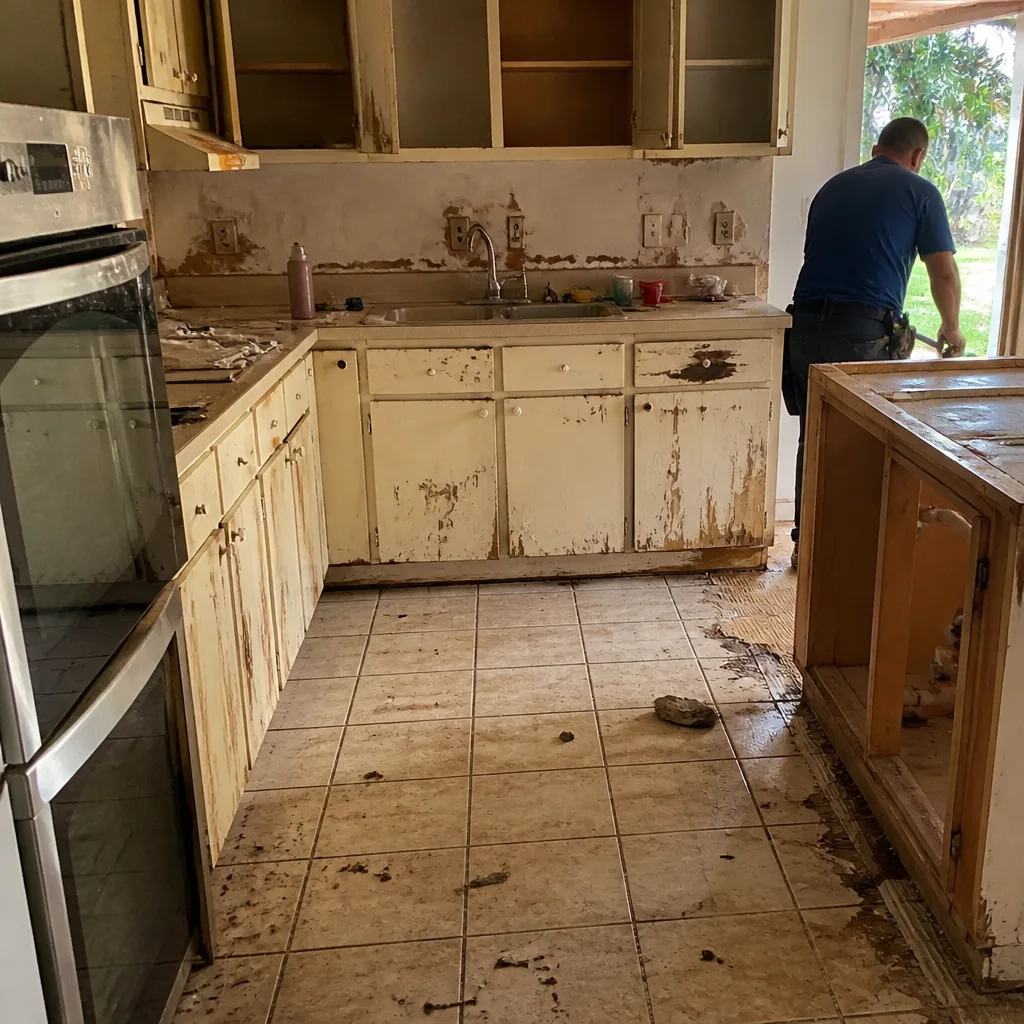 Before
 After
When to Call a Professional
A paver driveway is a base-building project, not a surface-decoration project, and that’s where a professional earns their keep. Call us when your existing driveway is settling or heaving in a broad area, when water ponds after storms or runs toward the garage, when you’re replacing concrete and want to understand the base depth your soil actually requires, when your HOA needs a color and pattern review before work, or when the work touches the right-of-way and needs a Miami-Dade County permit. If a contractor suggests skipping the permit or plays down the base depth, that’s your cue to get a second opinion. Kendall Construction Co offers free estimates in Kendall. Call (888) 300-8968 to schedule yours, with a written line-item quote and fixed pricing.
Frequently Asked Questions
Pricing depends on square footage, base depth, material, and site access, so the written estimate sets the final number. Concrete pavers sit in the mid range, travertine runs higher, and permeable systems cost more because of the open-graded base and reservoir design. Call (888) 300-8968 for an exact quote – estimates are free.
Six to eight inches of compacted aggregate is the working range for most Kendall driveways, deeper where the clay and marl subgrade is soft. National standards often call for four inches, which is built for more stable soils and usually fails here. Ask any contractor how deep they go and how they compact it.
Often yes, especially when work touches the right-of-way, changes the footprint, or involves drainage. The exact trigger depends on your scope, so confirm with the county building department before demolition. We pull permits and pass inspections as standard. Call (888) 300-8968 to talk through your project.
Not with fixed pricing and a written line-item estimate. The quote should show base build, paver product, joint sand, edge restraint, and disposal, so there are no surprise change orders. We hold to the written estimate. Call (888) 300-8968 for yours.
Start with the community’s architectural guidelines and confirm approved colors and patterns before ordering materials. Most Kendall committees want a sample or photo plus the product name, and approval should be in writing. It’s the most common project-killer we see. Call (888) 300-8968 if you’d like help preparing the submittal.
Both work; the choice comes down to budget and priorities. Travertine is cooler underfoot and more elegant but costs more and is less forgiving of base movement. Concrete pavers are durable, repairable, and easier to source in HOA-approved colors. Call (888) 300-8968 and we’ll walk through the tradeoffs for your lot.
The Bottom Line
Paver driveways fail in Kendall for a handful of predictable reasons: a base built to a national spec instead of for local clay and marl, compaction done in one pass, a slope that ponds water, an HOA color the committee never approved, or a permit skipped at the start. Every one of those is preventable. Get the base deep and compacted in lifts, grade the surface so water reaches the street or a drain, choose your material around heat, UV, and HOA rules, and pull the permit. Do that and your pavers will outlast the next roof. That’s the whole guide in a paragraph, and it’s the reasoning behind the driveway & pavers work we do across Kendall.
Whether your project is a driveway, a fence, a roof replacement through a GAF or Tamko line, impact windows through PGT, or a full exterior refresh, one contractor can carry it from curb to ridge. That’s what Kendall Construction Co is built for. Call (888) 300-8968 to schedule your free estimate. We answer 24/7. Fast dispatch from 7am to 7pm, Sunday through Friday.
Written by the team at Kendall Construction Co.