Last updated November 18, 2026







Free written scope consultation - allowances, timeline, and change-order rules on paper before a single trade is scheduled
Construction Permits, Codes & Inspections in Kendall, FL: What You Need to Know
Most homeowners assume a bad renovation is the worst thing that can happen to a house. In Miami-Dade, an unpermitted one can be worse. An addition built without county sign-off can legally block a sale or a refinance until it’s either brought into compliance or demolished, and that demolition happens at the owner’s cost, not the builder’s. That single fact changes how you should think about planning a project in Kendall. A permit isn’t paperwork you file after the design is finished; it’s the first decision that shapes what you can build, what materials you can legally install, and how long the job will actually run. This guide walks through the county layer that sits on top of your city permit, the High Velocity Hurricane Zone Product Approval rule, the Notice of Commencement, realistic 2025-2026 permit timelines, and how to pull a property’s inspection history before you buy a house that’s already been “renovated.”
Quick Answer
Construction in Kendall, FL requires a building permit from the local municipality plus, in many cases, separate review or approval from Miami-Dade County because the county enforces its own codes for roofing, impact windows and doors, generators, and any structure inside the High Velocity Hurricane Zone. Every product used in those categories must carry a Miami-Dade or Florida Product Approval that’s verified before the material is ordered. Plan on longer review times than the statewide average, and expect a Notice of Commencement to be recorded before inspections begin.
Styles & brands we work with
- Kitchen remodeling
- Bathroom remodeling
- Home additions & ADU
- Roofing
- Windows & doors
- Driveway & pavers
- Fence
Table of Contents
- What work requires a permit in Kendall?
- Why Miami-Dade County reviews some projects on top of the city permit
- The HVHZ Product Approval rule and why it matters before materials arrive
- The Notice of Commencement and how it protects you
- Realistic permit timelines by project type
- How inspections work and what fails most often
- How to check a property’s permit and inspection history
- Buying a Kendall home with prior renovations
What work requires a permit in Kendall?
In general, any work that changes the structure, the building envelope, the electrical system, the plumbing system, or the mechanical system needs a permit in Kendall. The list below covers what we see most often. When in doubt, call the building department that has jurisdiction over your address before you sign a contract. It’s a five-minute phone call that has saved a lot of homeowners from tearing out finished work.
- Additions and ADUs: Anything that adds conditioned square footage, including a garage conversion, an attached addition, or a detached accessory dwelling unit.
- Roof replacement and structural roof repair: A full roof replacement, a change in roofing material, and any repair that touches the decking or framing.
- Impact windows and doors: A replacement of windows or exterior doors, including a single unit if the opening size changes.
- Pools, screen enclosures, and patios: New pools, resurfacing that changes the shell, and covered structures attached to the house.
- Electrical, plumbing, and mechanical changes: Panel upgrades, new circuits, re-piping, water heater replacement, and AC changeouts.
- Generators and standby power: A permanent standby generator, its transfer switch, and its gas or electrical connection.
- Fences and driveways: Fences over a certain height, fences in an easement, and new driveways or pavement that changes stormwater runoff.
Cosmetic work usually doesn’t need a permit: paint, flooring, cabinet refacing, and swapping a light fixture for an identical one. If a contractor tells you a permit “slows things down,” ask what specifically they plan to skip. The honest answer is often “the inspection.”
Why Miami-Dade County reviews some projects on top of the city permit
Kendall is an unincorporated community inside Miami-Dade County, which means the county is often the permitting authority for your address, not a separate city. For homeowners used to a single municipal building department in other parts of Florida, this is the first surprise. You may be filing with Miami-Dade County’s Department of Regulatory and Economic Resources rather than a city hall. Confirm which office has jurisdiction for your street before submitting anything.
Even where a municipality issues the permit, Miami-Dade County retains review or approval roles for certain categories. These are the ones we see on nearly every project scope:
- Roofing: Product approvals, wind-load calculations, and, for some structures, county-level plan review.
- Impact windows and doors: Every assembly must be approved for the specific opening size and design pressure.
- Generators: Standby generators need an electrical permit, a fuel permit, and often a zoning check for setbacks and noise.
- Structural work inside the HVHZ: Any product that forms part of the wind-resistant envelope.
The practical takeaway: before you commit to a schedule or a delivery date, know which office issues the permit and which office approves the product. Those two dates are different, and confusing them is the single most common cause of a stalled job in Kendall.
The HVHZ Product Approval rule and why it matters before materials arrive
The High Velocity Hurricane Zone designation, known as HVHZ, is a stricter building standard that covers Miami-Dade County as a whole. It’s not a general guideline; it’s a legal requirement that every product forming part of the building envelope in the HVHZ carry a Miami-Dade or Florida Product Approval, tested for wind pressure, impact, and water infiltration. That includes roofing underlayments, roof tiles, windows, doors, shutters, and skylights.
Here’s where homeowners lose weeks. A nice-looking roofing tile that’s approved in another Florida county may have no HVHZ approval at all. The material ships. The crew stages it on the roof. The inspector arrives for the pre-installation inspection and finds a product with no acceptable approval. The material comes off and the job restarts, sometimes weeks later and sometimes with a different product spec that changes the contract price.
The fix is unglamorous. Check the product approval before you sign a contract or order material. Our own process, when we install GAF or IKO roofing systems, is to match the assembly to the approval report for the specific address and pitch, then confirm the written specs against the permit drawings before the order goes in. Two minutes of checking saves two weeks of delay.
How to verify a product approval
- Ask your contractor for the approval number, not just the product name.
- Look up the approval on the Miami-Dade County product approval database or the Florida Product Approval system.
- Confirm the approval matches your opening size, roof pitch, and installation method, not just the brand.
- Have the number written on the permit submission so the plan reviewer can match it.
The Notice of Commencement and how it protects you
A Notice of Commencement, or NOC, is a legal notice recorded with the Miami-Dade County Clerk of the Court before the first inspection on most permitted projects. Most homeowners have never heard of it. Contractors sometimes skip it because it feels like extra paperwork. It isn’t. It’s the document that protects your property from contractor liens.
Here’s the reasoning. When you hire a contractor, that contractor may hire subcontractors and suppliers. If the general contractor doesn’t pay one of those subs, the sub can record a lien against your property. If a valid NOC is on file, the sub is legally required to send you a Notice to Owner and eventually a Notice of Intent to Lien. That notification gives you time to act. If the NOC is missing, the lien process can move forward without your knowledge, and you can end up with a cloud on your title over a bill you never saw.
The NOC also lists the contractor of record, the permit number, and the lender if any. It’s a short document. Getting it right is not optional. We record the NOC on every permitted job we work on, because the alternative is a homeowner paying for a mistake that wasn’t theirs.
Realistic permit timelines by project type
Statewide permit timelines are not useful in Miami-Dade. The county review is heavier, the product approval check adds a step, and inspection scheduling can back up during the busiest months. The ranges below are typical for Kendall in 2025-2026 and assume a clean submission with corrected plans on the first pass. These are estimates, and the building department’s own calendar sets the real date.
- Fence or driveway: 1-3 weeks if the lot is straightforward and no easements are involved.
- Water heater or AC changeout: Same week, sometimes the same day, if the product approval is on file.
- Standby generator: 2-4 weeks including electrical and fuel permits.
- Roof replacement: 3-6 weeks total, with 1-2 weeks for the permit and 1-3 weeks for inspection scheduling.
- Impact windows and doors: 3-6 weeks, plus lead time on the units themselves.
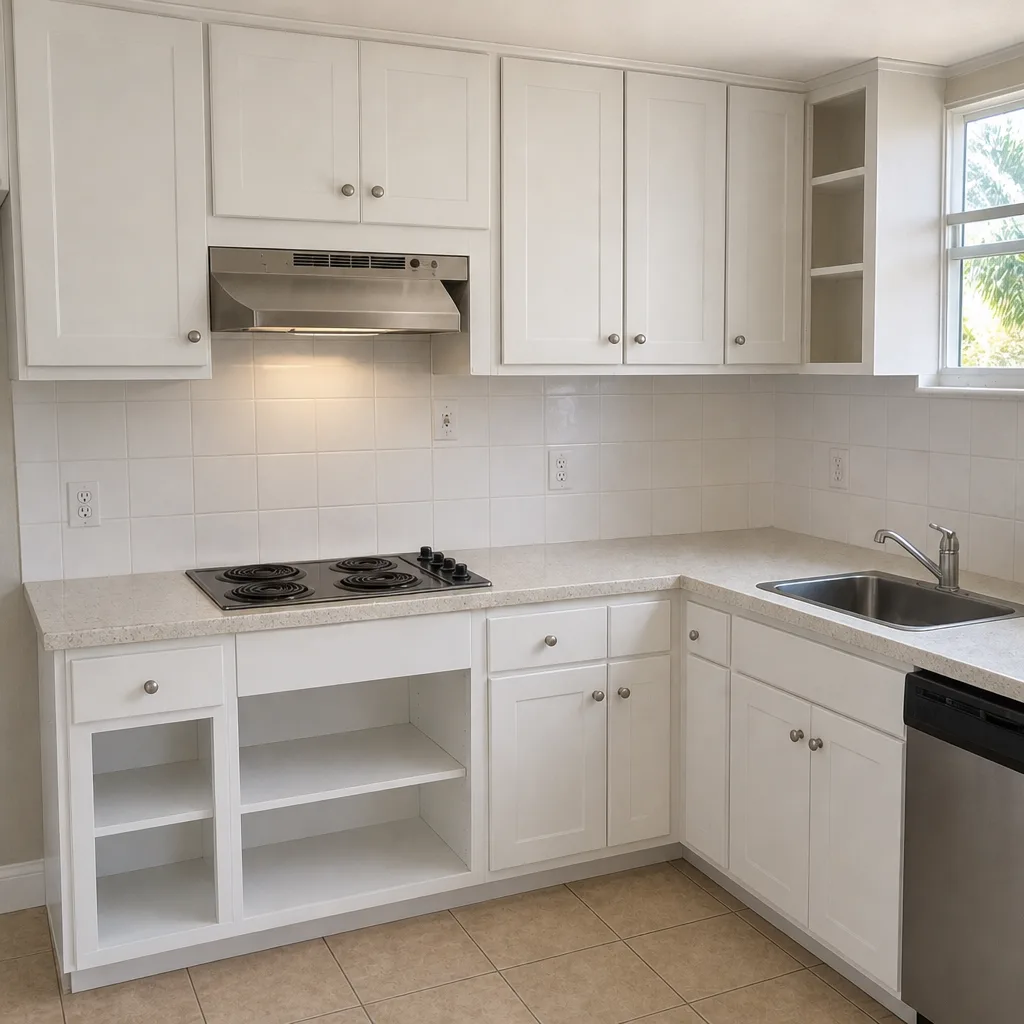
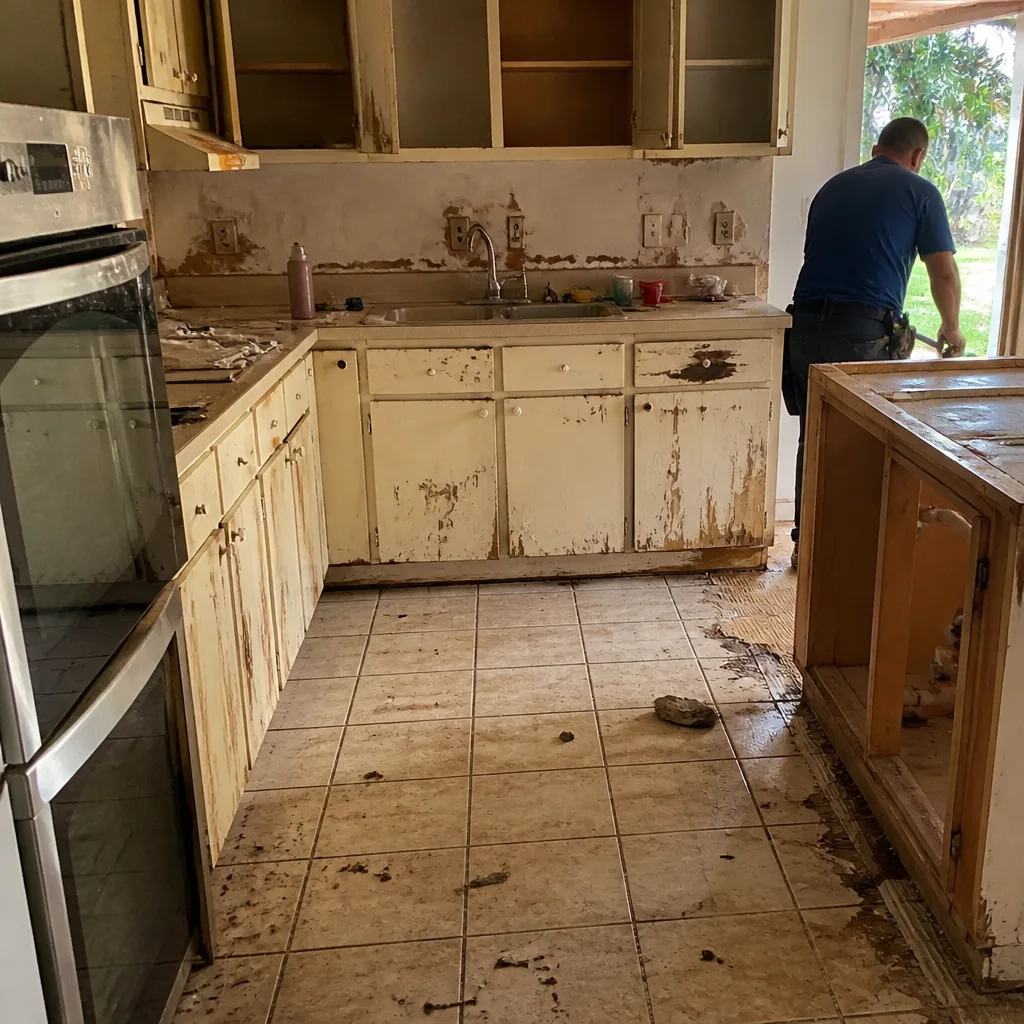
- Kitchen or bathroom remodel: 3-5 weeks for the permit portion of a 6-10 week project.
- Addition or ADU: 6-12 weeks for permit review alone, and sometimes longer for a detached unit with a structural plan.
None of these ranges work if the plans are wrong. A resubmittal adds at least one review cycle, and each cycle is measured in weeks, not days. Hire a contractor who has been through the resubmittal process and treats a clean first pass as the goal. That’s also why we get frustrated when a homeowner is squeezed on time by a low bid. Cheap plans mean slow permits, and two weeks of permit delay can cost more than the difference in bid.
How inspections work and what fails most often
Inspections happen in sequence, and each one releases the next stage of work. You can’t skip ahead. A failed inspection stops the job until the item is corrected and re-inspected, and the re-inspection carries its own scheduling delay.
- Pre-inspection and site documentation: Before work begins, the permit, NOC, and job site details are verified.
- Rough-in inspections: Framing, electrical rough, plumbing rough, and mechanical rough are inspected before drywall.
- In-process envelope inspections: Roof deck, fasteners, underlayment, and window opening prep are inspected before the finished surfaces go on.
- Final inspections: Fixtures, finishes, and the completed envelope are checked against the approved plans.
The failure items we see most in Kendall involve fastener schedules, flashing at roof penetrations, and product approvals that don’t match the unit numbers on the drawings. A single wrong screw pattern on a roof deck can fail a pre-cover inspection. That sounds petty until you consider that in an HVHZ county, the fastener schedule is the difference between a roof that stays on and one that doesn’t.
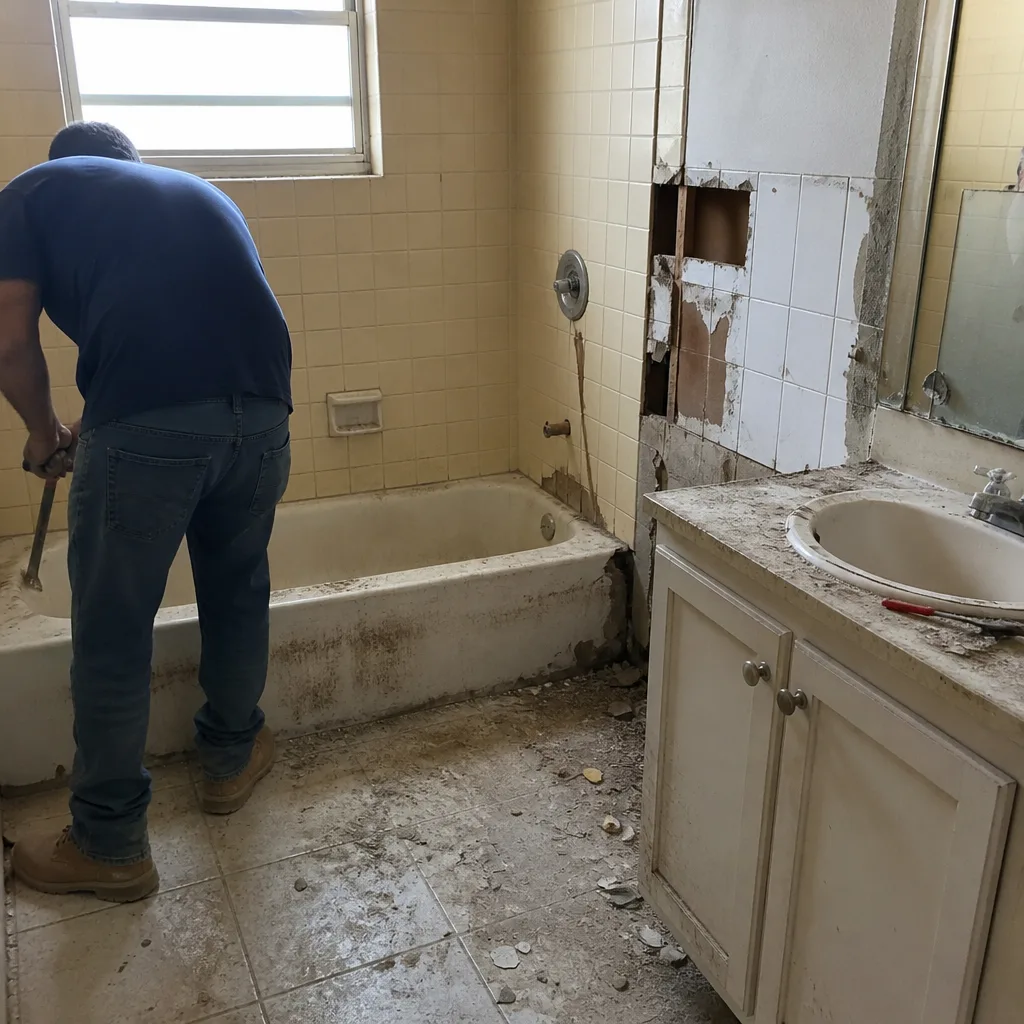
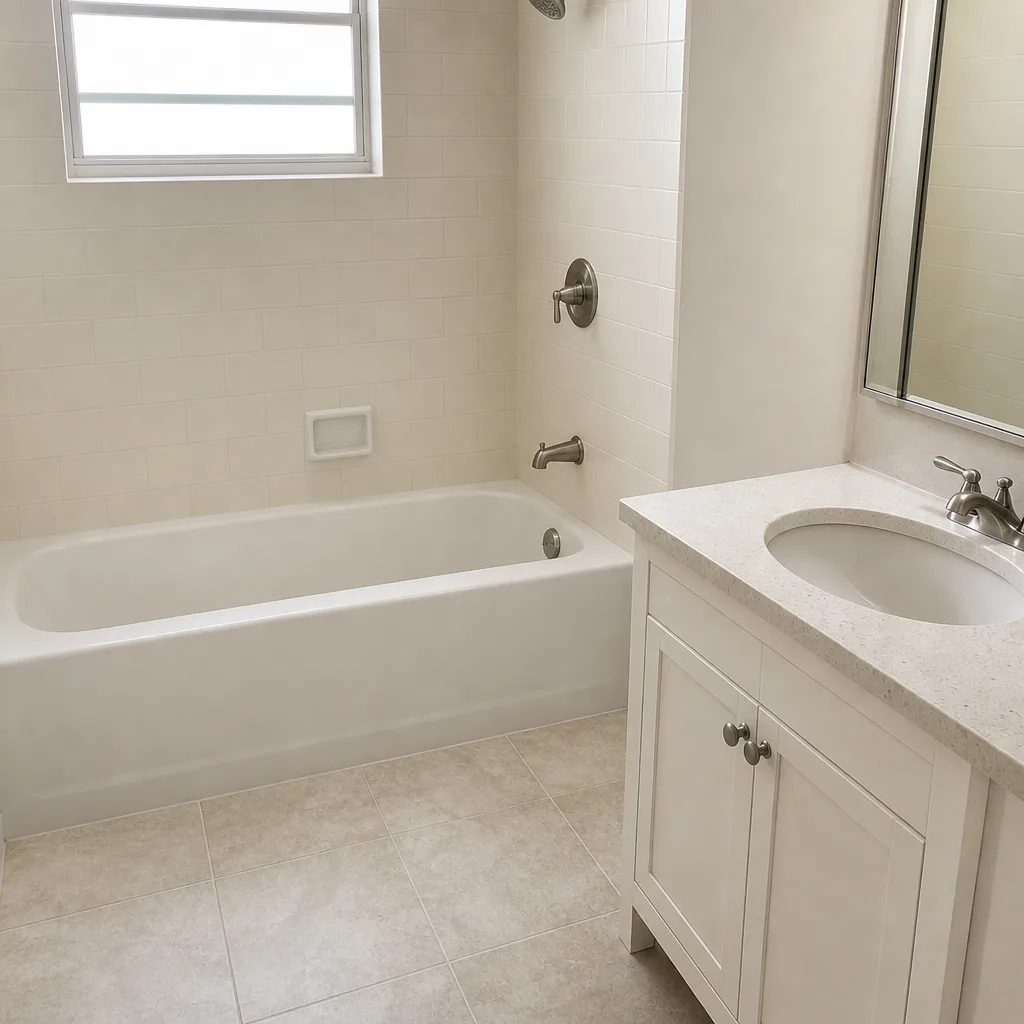
If you’re planning a bath remodel, the waterproofing inspection is the one that catches most contractors. We use Schluter Systems tile and waterproofing assemblies in the bathrooms we build, and the inspection is straightforward when the substrate is built to spec. When it’s built off-spec, the fix is demo. That’s not a risk we take on.
How to check a property’s permit and inspection history
Miami-Dade County maintains an online permit portal that lets you search by address or folio number and see permit history, inspection records, and open violations. This is the single most useful tool a buyer has before closing on a Kendall home with prior renovations. It’s public, and it takes about ten minutes per property.
- Get the property’s folio number from the county property appraiser site or the listing.
- Search the county permit portal by folio number rather than by address, which is often more reliable.
- Read every entry: what was permitted, when, and whether every inspection was signed off as final or “approved.”
- Flag anything marked “expired,” “open,” “failed,” or “re-inspection required.”
- Flag any improvement that’s visible in the listing photos but not on the permit record. New roof, new windows, new addition, or a converted garage are the classic ones.
- Get any open or missing permit resolved by the seller in writing before you close.
What you find may surprise you. A house with a beautiful kitchen may have zero records of the electrical work, which means the panel and the circuit layout may never have been inspected. An addition with no permit on file can be a deal killer or a serious negotiating chip, depending on the scope.
Buying a Kendall home with prior renovations
Miami-Dade’s stricter enforcement changes the way you should approach a Kendall closing. An unpermitted addition isn’t a footnote in a disclosure packet. It’s a compliance problem that follows the property, not the seller. Sellers can walk away. Buyers inherit the compliance obligation, including any directive to bring the work up to code or, at the extreme, to remove it.
That’s why every buyer we’ve worked with around Kendall gets one consistent piece of advice: pull the permit history before you fall in love with a house. If the history is clean and the roofs and windows are product-approved for HVHZ, the home is a known quantity. If there are gaps, either price them into the offer or walk away.
If you’re planning to add an ADU, a garage conversion, or a detached addition to a property you already own, the same rule applies in reverse: the permit you file now protects your sale or refinance later. This is where a single contractor with the right trade coverage matters. Our home additions & ADU work is scoped from permit to final inspection, and our driveway & pavers and fence installation teams know the stormwater and setback rules that trip up plans in unincorporated Miami-Dade.
Common Mistakes to Avoid
- Choosing a product before checking its approval. A roofing tile or window system that’s approved elsewhere in Florida may not carry an HVHZ approval. Checking the approval report first saves a shipment and two weeks.
- Assuming the city permit covers everything. In unincorporated Kendall, Miami-Dade County is often the authority, and even when a city issues the permit, the county retains review on roofing, impact openings, and generators.
- Skipping the Notice of Commencement. Without it, subcontractor liens can appear on your title without the required notice reaching you. This is a homeowner protection, not a formality.
- Ordering material before the drawings are approved. It’s the fastest way to end up with a non-compliant product on a job site and a failed pre-cover inspection.
- Buying a renovated home without a permit history check. A beautiful finish-out can hide an unpermitted garage conversion or panel upgrade. Pull the county portal before closing.
- Treating the permit timeline as a marketing number. Contractors who quote unrealistic permit dates either don’t understand the county review or don’t plan to file. Both outcomes cost you.
- Letting one trade coordinate another. When the roofer, the window installer, and the electrician each blame the other for a failed envelope inspection, the homeowner pays for the do-over. One contractor with coverage across trades eliminates that gap.
See the difference
 Before
 After
 Before
 After
 Before
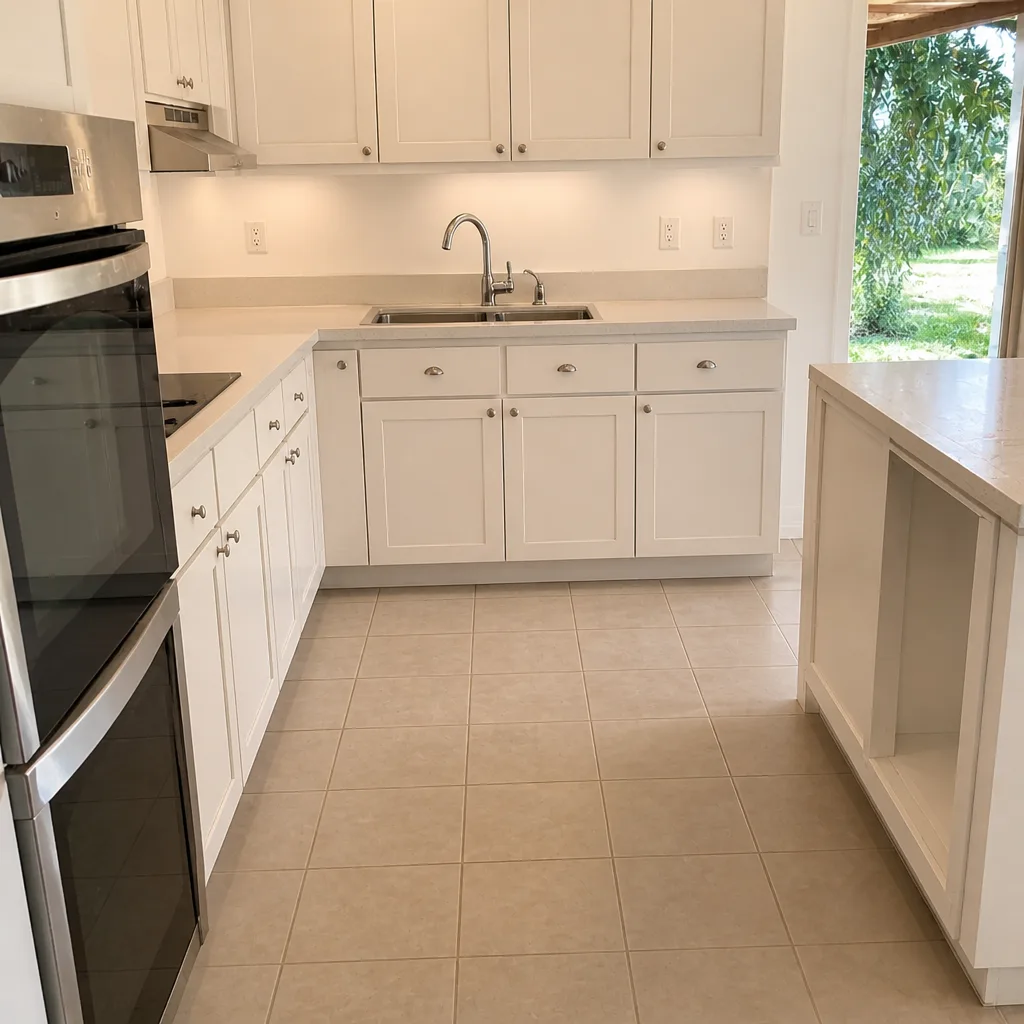 After
When to Call a Professional
Call a licensed contractor for anything that needs a permit, and call one before you buy a Kendall home with an unclear permit history. Specifically: any roof replacement or structural roof repair, any impact window or door replacement, any generator install, any addition or ADU, and any remodel that touches plumbing or electrical. Permits, product approvals, and inspection schedules are the parts of a project homeowners routinely try to handle on their own and most often get wrong. Our technicians have up to 14 years of experience working in Miami-Dade’s permitting environment, and we file the permit, verify the product approval, and walk the inspection. Kendall Construction Co handles every trade from the driveway to the roof, so the coordination doesn’t fall on you. Kendall Construction Co offers free estimates in Kendall: call (888) 300-8968. We answer 24/7. Fast dispatch from 7am to 7pm, Sunday through Friday.
Frequently Asked Questions
Yes. A roof replacement in Kendall requires a building permit and, in Miami-Dade County, a product approval for every component of the roof assembly that forms part of the envelope, including the underlayment and the finished roofing. The approval must match the actual product installed, not just the brand. Call (888) 300-8968 for a free estimate on a permitted roof replacement.
Kendall is an unincorporated community within Miami-Dade County, so the county is the permitting authority for most addresses. Even where a municipality issues the permit, the county retains review or approval on roofing, impact windows and doors, and generator installs. Confirm the jurisdiction for your specific address before submitting plans.
An HVHZ product approval is a Miami-Dade or Florida Product Approval confirming a building product has been tested for the wind, impact, and water resistance required inside the High Velocity Hurricane Zone. It matters because installing a non-approved product in Kendall means failing the inspection and removing the material, which costs time and money. Verify the approval number before you order.
The Notice of Commencement is a notice recorded with the Miami-Dade County Clerk of the Court before the first inspection on most permitted projects. It lists the owner, the contractor, and the permit information. It protects you, not the contractor, because without it a subcontractor can record a lien against your home without properly notifying you first.
Pull the property’s permit and inspection history from the Miami-Dade County permit portal using the folio number, and compare it to the improvements visible in the listing. Any improvement without a permit, and any inspection marked open, expired, or failed, needs to be resolved by the seller before closing. This is a ten-minute check that can change the price of the house.
Plan on 6-12 weeks for permit review on an addition or ADU, and sometimes longer for a detached unit with a structural plan. Ranges vary with the county’s current review queue and the completeness of the submission. A clean first-pass submission is the only way to keep the timeline in range, which is why we verify product approvals and drawing conformance before filing anything.
The Bottom Line
Permitting in Kendall is not the same as permitting in most of Florida. The county layer, the HVHZ Product Approval rule, and the Notice of Commencement are three things most homeowners learn about only when a job stalls. Get them right at the start and they quietly protect you through closing. Get them wrong and the fix can cost more than the project. The rule that sticks: verify before you order, record before you build, and pull the permit history before you buy. That’s the highest-return preparation a homeowner in Kendall can do, and it’s the part a good contractor carries for you.
Ready to plan a project without the permitting surprises? Call Kendall Construction Co at (888) 300-8968 for a free estimate. We answer 24/7. Fast dispatch from 7am to 7pm, Sunday through Friday. One contractor, every trade, from the driveway to the ridge.
Written by the team at Kendall Construction Co.