Last updated November 18, 2026







Free written scope consultation - allowances, timeline, and change-order rules on paper before a single trade is scheduled
Construction Warning Signs: A Kendall Homeowner’s Reference Guide
Most people judge a construction problem by how bad it looks. That’s the wrong test. A hairline crack in stucco can be entirely cosmetic, while a stair-step crack running along a concrete block wall is a structural warning that needs eyes on it quickly. In Kendall, the visible defects that matter don’t appear at random, either. They follow predictable patterns tied to our climate, our soil, and the building booms of the 1980s and 2000s. This guide walks through the warning signs worth your attention, which ones you can watch and which demand a call, and how the systems in a Kendall home tend to age.
Quick Answer
The construction warning signs that matter most in Kendall are stair-step cracks in block walls, efflorescence that keeps returning after rain, soft or stained roof decking visible from the attic, and fence fasteners that show corrosion rather than settling. Cosmetic issues stay small and stable over months; structural ones widen, spread, or come back after every storm. When a sign is growing or recurring, get an evaluation before the next rainy season.
Styles & brands we work with
- Kitchen remodeling
- Bathroom remodeling
- Home additions & ADU
- Roofing
- Windows & doors
- Driveway & pavers
- Fence
Table of Contents
- Crack Patterns in Kendall’s CBS Construction
- Why Efflorescence Is a Drainage Warning
- Roof Deck Warning Signs You Can See From the Attic
- Fence Settling vs. Fastener Corrosion
- The Age-Based Failure Timeline for 1985 – 2005 Homes
- Which Systems Are Overdue for Inspection
- Telling Cosmetic From Structural
- Documenting a Warning Sign Before You Call
Crack Patterns in Kendall’s CBS Construction
Most Kendall homes are built in CBS: concrete block and stucco. Block walls crack in recognizable shapes, and the shape tells you what’s happening underneath. Reading those shapes is the single most useful skill a homeowner can develop here. Thermal movement, soil settlement, and block shrinkage each leave a different signature.
Hairline and map cracking in stucco. Fine, web-like lines in the stucco surface are common and usually cosmetic. Stucco is a thin skin over the block, and it expands and contracts with heat and moisture. If these lines stay the same width year after year and don’t follow the block joints, they’re typically a finish issue, not a frame issue.
Stair-step cracks. A crack that zigzags along the mortar joints between blocks, like a staircase, is the one to take seriously. It usually signals that one part of the foundation is settling differently from another. On an exterior wall, photograph it, note the date, and have it evaluated rather than patched and painted over.
Horizontal cracks. A crack running horizontally through a block wall or along the base of the wall can point to lateral pressure from soil or water behind it. This is the pattern that most reliably warrants prompt professional review in our region, because our high water table puts steady pressure on retaining and foundation walls.
Vertical cracks. A single vertical crack that runs straight up through block and mortar is often shrinkage or a control joint doing its job. The concern rises when it widens, when it’s wider at one end than the other, or when it develops next to an opening like a window or door.
What you’re really measuring is change. A crack that’s been the same for a season is one kind of sign. A crack that’s measurably wider in three months is another. Measure width at a fixed point, mark the wall with the date, and compare. That record is what a professional will want to see, and it’s what separates a maintenance item from a structural evaluation in Kendall.
Why Efflorescence Is a Drainage Warning
That white, chalky bloom on pavers, driveways, or the base of a block wall is efflorescence: mineral salts carried to the surface by water moving through the material and left behind when it evaporates. Homeowners usually read it as a stain to scrub away. In South Florida’s water table conditions, it’s more often a signal about where water is pooling or moving when it shouldn’t, and where drainage is failing.
On a paver driveway, efflorescence tends to gather in the low spots, along the edges of the slab, and where the surface meets the house. Its location is the clue. If the bloom keeps returning to the same band after every heavy rain, water is likely sitting under or beside the pavers rather than draining away. Over time that trapped moisture weakens the base, loosens the joint sand, and leads to pavers that rock or settle unevenly. The fix isn’t cleaning the surface. It’s correcting the grading and drainage so the water has somewhere to go.
On a block wall or at the foot of stucco, recurring efflorescence spots can point to water wicking up from the ground or seeping behind the finish. That’s worth checking with a moisture reading before anyone repaints or re-stuccoes, because sealing the surface over a wet wall just traps the problem inside.
Here’s the working rule: a one-time bloom on new material is normal and usually fades on its own. Efflorescence that returns to the same place rain after rain is a drainage symptom. If your pavers or the base of your walls keep blooming, it’s a good moment to have the driveway & pavers and their drainage assessed together, since the grading, base, and surface all have to work as one system. In our experience around Kendall, the bloom is the first thing homeowners notice and the last thing they connect to drainage, and that gap is what lets small water problems quietly grow.
Roof Deck Warning Signs You Can See From the Attic
By the time a water stain shows up on your ceiling, the roof has usually been telling the story for a while from the other side. The attic is the cheapest inspection a homeowner can do, and it catches deck problems before they reach the living space. With our sun and seasonal downpours, the deck is under constant load, and it ages in ways you can see from the inside if you know what to look for.
Step into the attic on a bright day and look up with a flashlight. These are the signs that predict failure before the first interior stain appears:
- Daylight through the deck. Any light showing through the roof boards or sheathing means an opening somewhere above. Small points of light are a reason to look further now, not later.
- Dark streaks and water shadows. Brown or black streaking on the underside of the decking, near chimney and vent penetrations, says water is getting in and drying repeatedly.
- Soft or spongy sheathing. Gently probe the wood in suspect areas. If it gives or crumbles, the panel is losing its strength, which changes what the roof can hold in a storm.
- Rusty or backed-out fasteners. Nails and fasteners that are rusted through or lifting out of the deck point to long-term moisture exposure.
- Sagging between rafters. A visible sag or dip in the deck line from below means the framing or sheathing is under distress.
- Staining at the framing and ridge. Water marks along rafters and the ridge board often track back to a failing underlayment or flashing detail.
One glance at the deck from the inside will tell you whether the roof is a watch item or a call-it-in item. We install roofing systems using GAF and CertainTeed, and we always look at the deck first, because a new roof over compromised sheathing is money spent twice. If you see any of the signs above, have the roof inspected before the next heavy rain season rather than after it.
Fence Settling vs. Fastener Corrosion
After a storm, plenty of fences in Kendall look slightly off. Posts lean, gates stick, and panels ride a little uneven. Some of that is normal settling from saturated soil and wind load, and it corrects or can be re-set. But there’s a second pattern that looks similar and won’t correct on its own: fastener corrosion that weakens the fence ahead of the next wind event. Telling them apart is the difference between a weekend adjustment and a fence that fails in the next big blow.
Normal post-storm settling shows as a small uniform tilt, a gate that drags, or a panel that’s shifted a fraction. The hardware is sound, the posts are firm in the ground, and the fence holds its shape once the gate is adjusted. That’s a maintenance item.
Fastener corrosion looks different up close. Check the screws, nails, and brackets where panels meet posts:
- Look for rust streaks running down from fasteners onto the wood or vinyl, not just a dull sheen.
- Check whether heads are recessed or the metal is pitting and flaking.
- Tug a panel gently at each connection point. Any movement beyond a slight give means the fastener has lost its bite.
- Inspect the hinges and latches on gates first, since those take the most movement and wear fastest in humidity.
- Check the post base and any metal anchors at ground level, where moisture lingers longest.
If fasteners are corroding, the fence may still look plumb on a calm day while every connection is quietly loosening. When we install fencing with Master Halco or Jerith systems, matching the fastener material to the climate is part of the job, because the hardware is where a storm finds the weak point. If you’re seeing rust tracking down the panels, have the fence inspected before the next wind event. Our fence installation work includes checking existing connections, not just the posts.
The Age-Based Failure Timeline for 1985 – 2005 Homes
Kendall grew fast in the 1985 – 2005 construction wave, and a large share of local homes went up inside that window. That matters because building materials and systems have a service life, and homes from that era share a set of predictable, age-related checkpoints. Knowing the timeline turns vague worry into a short list of things to inspect.
- Roofing. Roof coverings have a finite life, and a roof from the earlier part of that wave is well past its expected service years. If it hasn’t been replaced, start with an attic inspection and a roof evaluation.
- Windows and doors. Original windows and entry doors from that period often lose their seals and hardware over time. If you’re looking at impact-resistant glass for security, noise, and storm protection, that’s a natural upgrade window too.
- Plumbing fixtures and supply lines. Fixtures age beyond their finish, and the connections behind walls are worth a look as homes cross into their third decade. Kohler and Moen fixtures are common upgrade replacements when the old ones reach end of life.
- Exterior cladding and stucco. Stucco and siding from that era need periodic moisture and crack review, especially near windows, doors, and the roof line.
- Driveway and paver systems. Base settlement and joint sand loss accumulate over decades. This is where efflorescence and rocking pavers show up first.
- Fencing. Fastener corrosion sets the timeline here more than the wood or metal itself, and it’s the connection points that decide whether a fence holds in a storm.
- Drainage and grading. Site drainage that worked at move-in often underperforms decades later as materials settle and grade shifts. This is the most overlooked item on the list.
None of this means every 1990s Kendall home is in trouble. It means these systems have known service lives, and if the systems have never been evaluated, the guide above gives you a sensible order to check them in. We handle everything from the roof to the driveway under one company name for exactly this reason: the inspection tells one coherent story about the whole house.
Which Systems Are Overdue for Inspection
A warning sign doesn’t always announce itself in a wall. Some of the most expensive failures in Kendall homes start in systems homeowners rarely inspect: drainage, waterproofing, and the connections that tie one trade to another. These are the areas where a small oversight compounds quietly until a bigger repair shows up.
Site drainage. Where does water go in a heavy rain? If it pools against the house, along the fence line, or in front of the garage, it’s loading the foundation and pushing under every surface. A grading and drainage review answers that in plain terms.
Bathroom waterproofing. A bathroom remodel is only as good as what’s behind the tile. Proper waterproofing and decoupling systems, like Schluter Systems, are the difference between a bathroom that stays trouble-free and one that shows water damage years later. If you’re noticing loose tile, soft grout, or a musty smell in a bathroom, the underlying waterproofing is worth checking before you retile over it.
Window and door seals. Failed seals around windows and exterior doors let water into the wall and stucco, and the interior stain often appears far from the actual opening. When we install impact-resistant glass and entry doors, resealing the whole opening is part of the work, not an afterthought.
Roof flashing and penetrations. The deck signs covered earlier often trace back to a flashing detail where roof meets wall, vent, or chimney. Flashing is small and easy to overlook, and it’s where a roof most often fails first.
Wall and foundation moisture. Returning efflorescence and interior musty smells point to moisture moving where it shouldn’t. A moisture reading before repainting or re-stuccoing is the difference between fixing the cause and covering it.
If more than one of these overlaps in your home, it usually makes sense to look at the whole envelope together rather than piece by piece. That’s the Kendall Construction Co approach: one accountable contractor for roofing, windows, doors, and the surfaces around them, so the inspection findings connect instead of getting lost between separate subcontractors.
Telling Cosmetic From Structural
The single most important judgment in this guide is deciding whether a warning sign is cosmetic or structural. Get that call right and you either save money by waiting or save your home by acting. Get it wrong and you either overpay for a non-problem or miss one that’s still cheap to fix.
Use the four questions below in order:
- Is it growing? Measure and date it. A crack, stain, or sag that’s the same in three months behaves very differently from one that’s measurably wider or larger.
- Does it return? Efflorescence, water stains, and rust streaks that come back after every rain point to an active moisture problem rather than a one-time event.
- Does it follow a pattern? Stair-step cracks in block, horizontal cracks at the wall base, and sagging deck lines belong on the structural track. Fine stucco crazing, a single straight shrinkage crack, and one-time blooms on new material usually don’t.
- Does it affect how something works? A sticking gate, a door that won’t latch, a sloping floor, or a soft deck are functional signs. Cosmetic issues rarely change how a house operates.
If a sign lands on the structural side of any of these, get an evaluation. That doesn’t automatically mean a major project. It means a professional assessment, a moisture reading, or a structural review before deciding. When we look at homes around Kendall, we’re asking these same four questions, and the honest answer is that many visible issues are cosmetic while a smaller share are the ones that matter. The point of the exercise is to catch the small share early, when the fix is smaller.
Documenting a Warning Sign Before You Call
A clear record turns a stressful observation into a useful inspection. It also helps a professional assess the situation faster and gives you a baseline to compare against. Here’s how to build it without any special tools:
- Photograph the sign with a reference. Place a coin, ruler, or tape measure next to a crack so its width is visible in the photo.
- Mark and date the spot. Use painter’s tape and write the date on the wall beside the crack or on the paver with chalk. Measure width and compare later.
- Note the location in the home. Which wall, which face of the house, and how close to a window, door, roof line, or corner. Context tells a lot about cause.
- Track when it appears. Does it show after heavy rain, after wind, or without any trigger? Patterns point to whether it’s moisture, soil, or thermal movement.
- Photograph the surrounding area. Capture the grade, gutters, drainage, and anything nearby, because the cause is often a few feet from the symptom.
- Keep a simple log. A few lines per visit, with dates, gives any inspector a growth record instead of a single snapshot.
That record is also the foundation for a free estimate. When we sit down with a homeowner, the documented history lets us scope the work accurately, use a written line-item quote, and fix the price so there are no change orders once it starts. That’s one of the reasons we rely on vetted local professionals with real trade expertise: the documentation gets read carefully, not skimmed.
Common Mistakes to Avoid
- Patching a stair-step crack and calling it done. Paint over a structural crack hides the one record you’ll need. Measure it first, then repair it.
- Power-washing efflorescence away. Cleaning the surface leaves the drainage cause in place, and the bloom will be back after the next heavy rain. Treat the water, not the stain.
- Assuming a new roof fixes a wet attic. If the deck is soft or the flashing is failing, a new roof over it shortens its life. Inspect the deck before replacing the covering.
- Judging a fence by how it looks on a calm day. Corroded fasteners hide behind plumb panels. Tug the connections, don’t just look at the post line.
- Ignoring the whole envelope after one symptom. Roof and window leaks travel. If one trade finds moisture, check the adjoining systems before writing the check.
- Waiting for a water stain on the ceiling. The attic shows problems before the ceiling does. Look before you’re forced to repair.
- Booking the cheapest patch job on an age-overdue system. A quick fix on a system past its service life costs more over time. Get the full picture and a fixed quote first.
See the difference
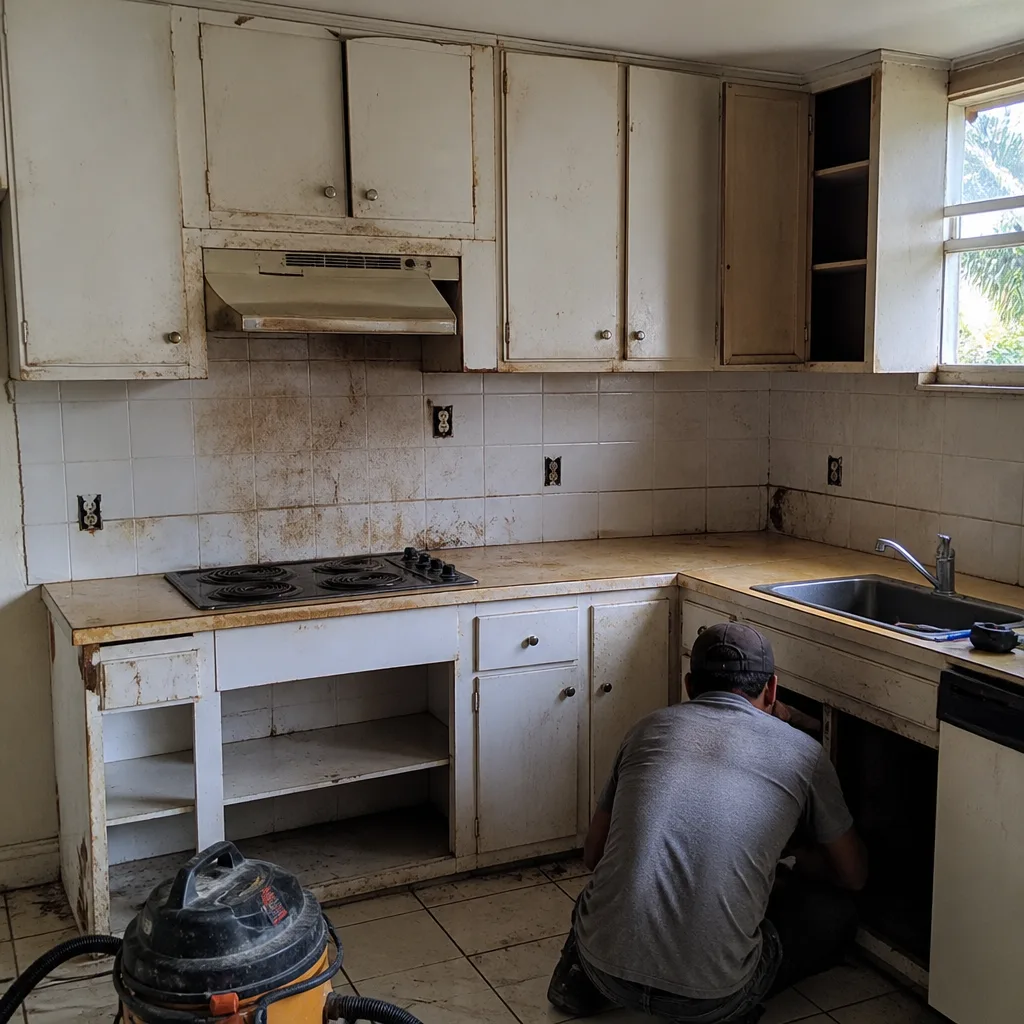 Before
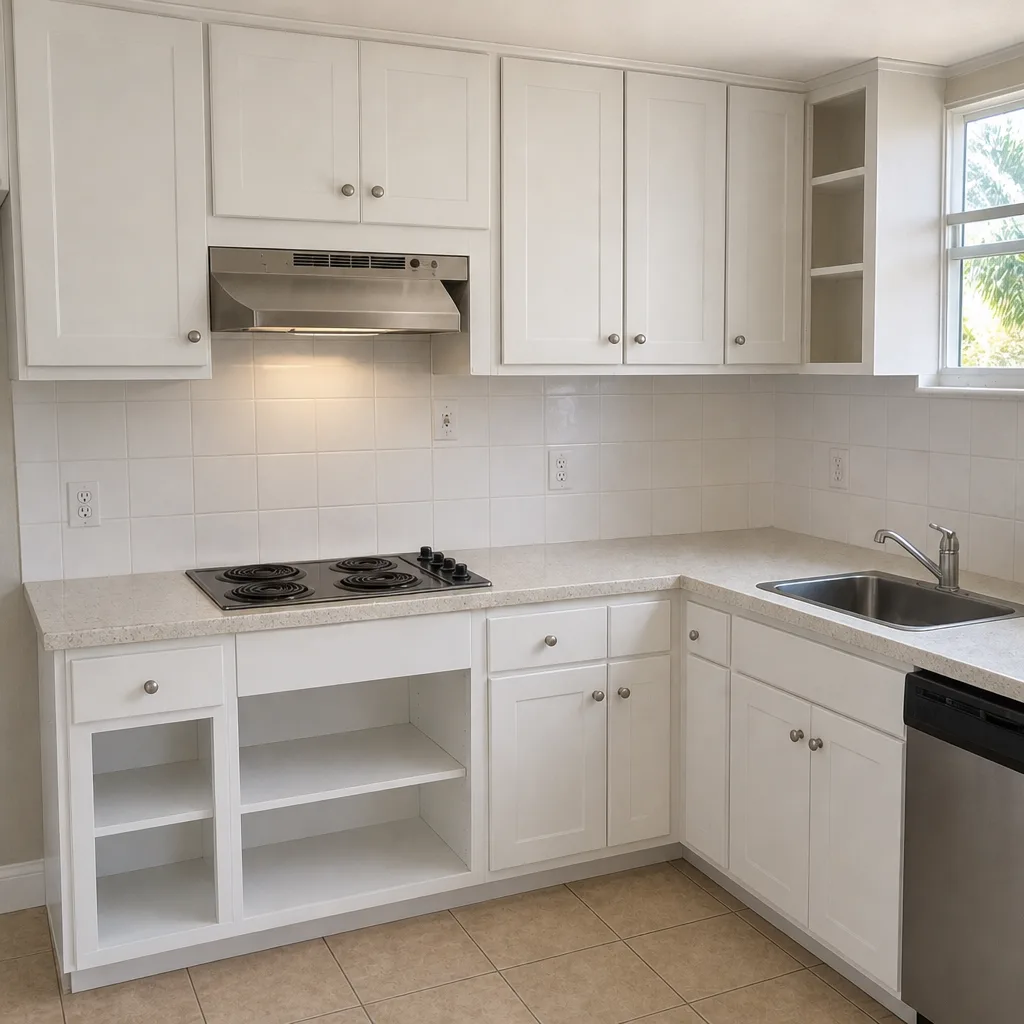 After
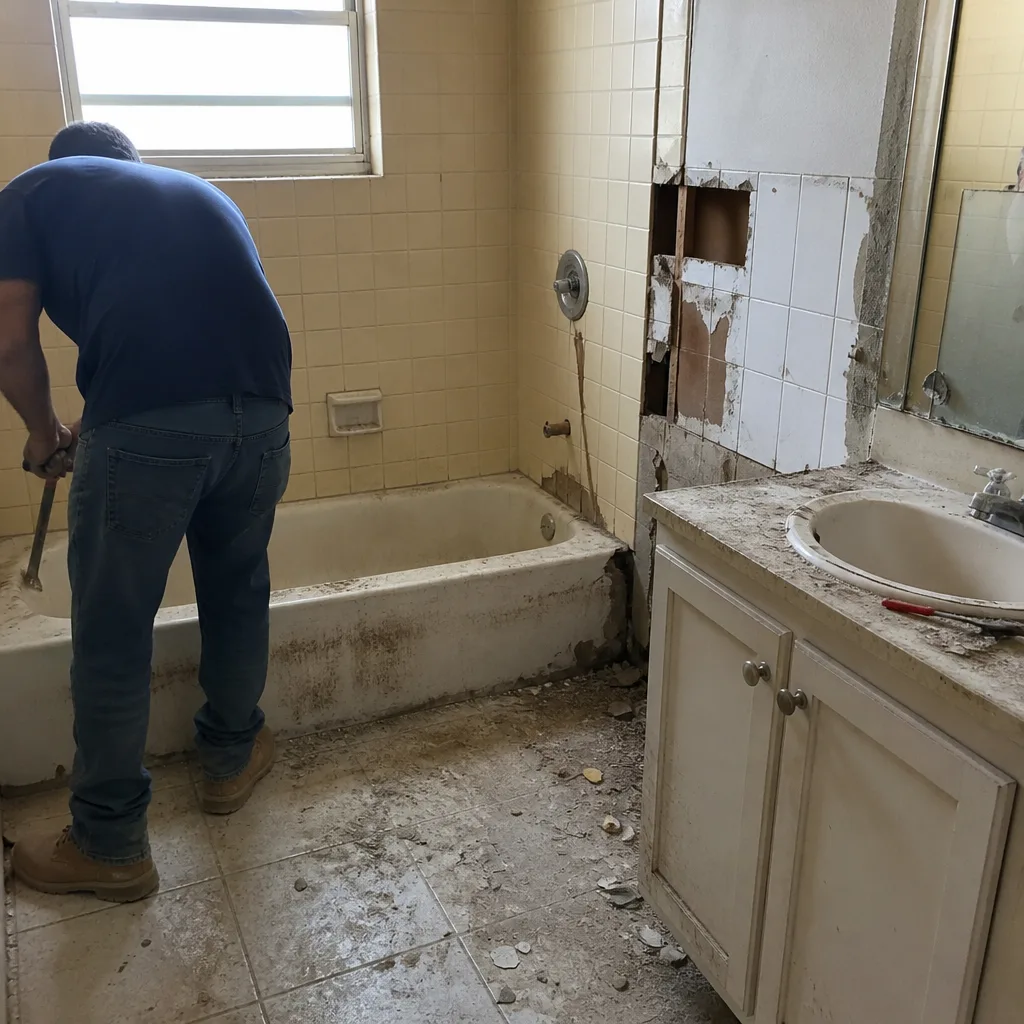 Before
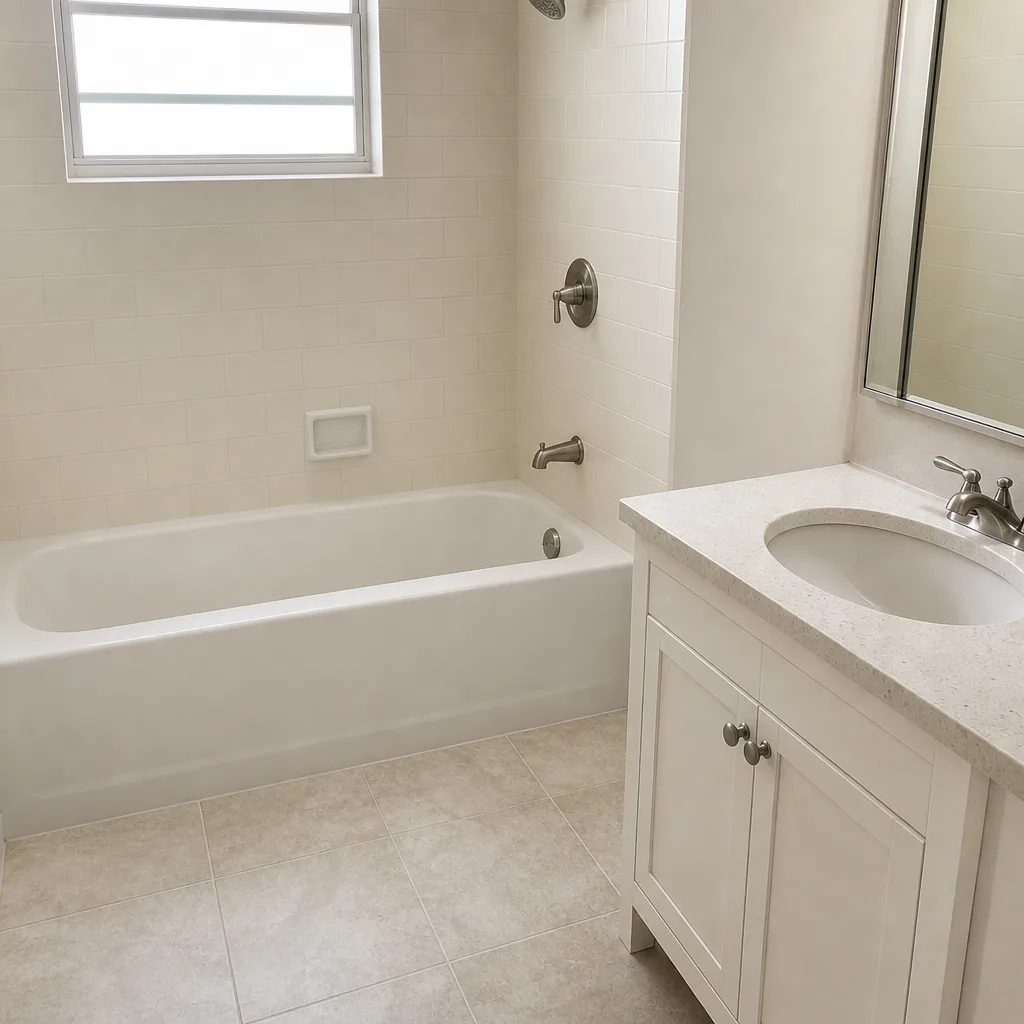 After
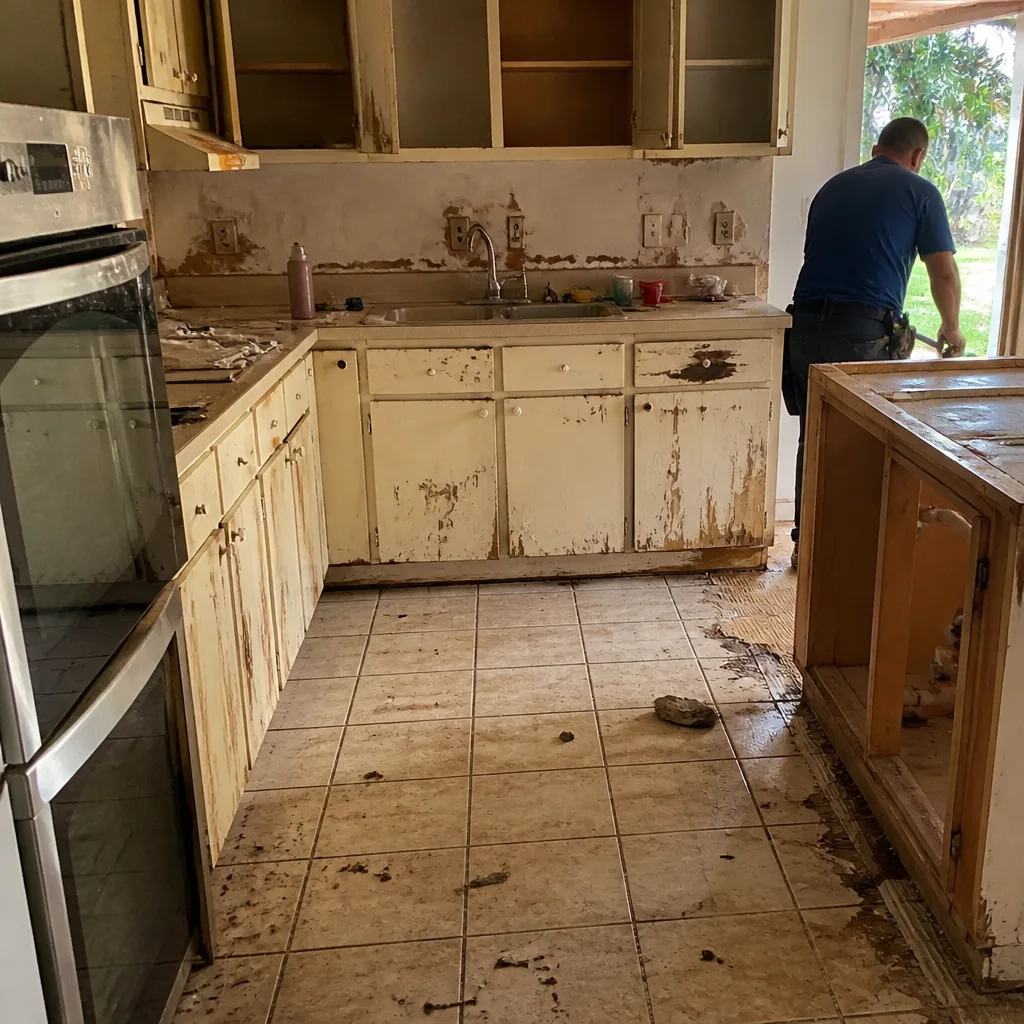 Before
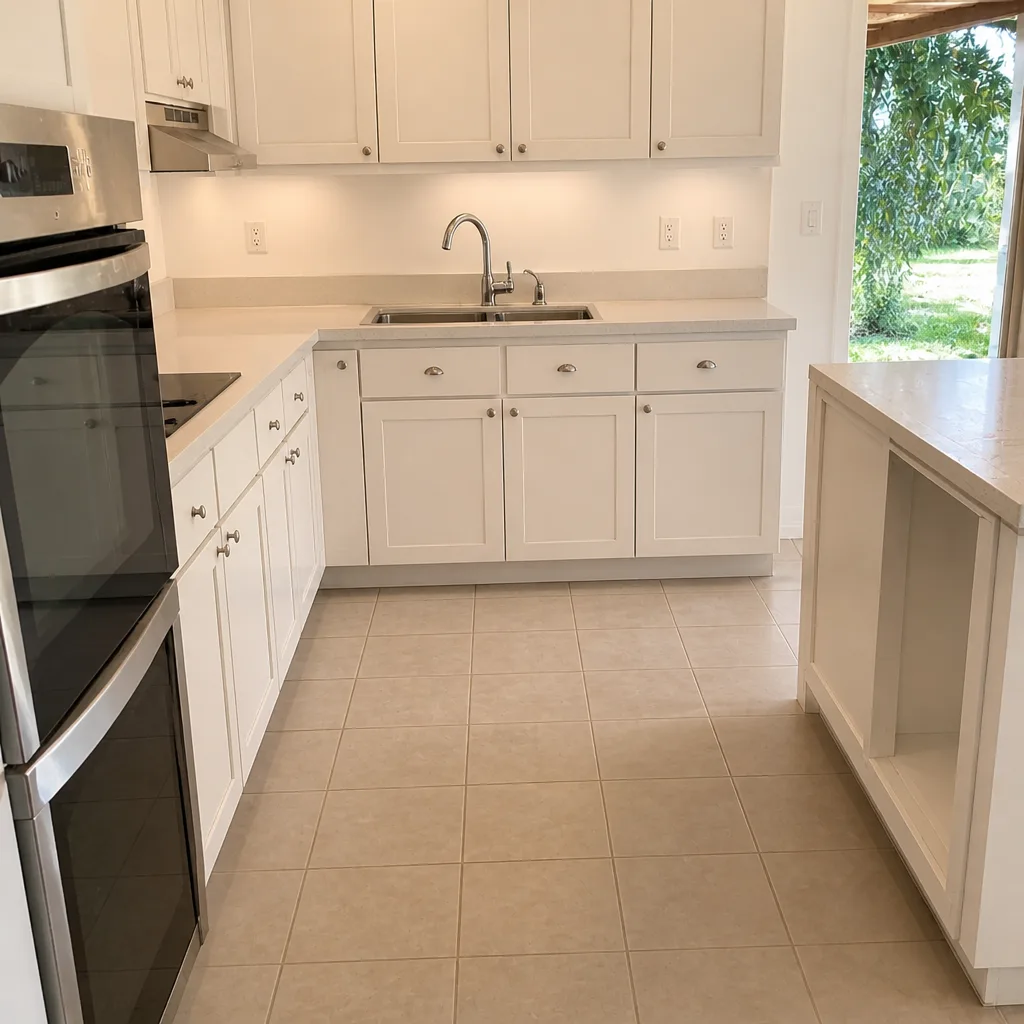 After
When to Call a Professional
Call a professional when a sign is growing, when it keeps returning after rain, or when it changes how part of the house works. A stair-step or horizontal crack in block, a sagging or soft roof deck, rust tracking down a fence, and efflorescence that reappears in the same spot every season all deserve an evaluation. So does a home from the 1985 – 2005 wave whose roof, windows, or plumbing has never been reviewed, and any time you’re facing a repair on a system that’s past its service life. Our technicians have up to 14 years of experience, and inspections are how we help Kendall homeowners sort cosmetic issues from the ones that need action now. Kendall Construction Co offers free estimates in Kendall – call (888) 300-8968. We answer 24/7. Fast dispatch from 7am to 7pm, Sunday through Friday.
Frequently Asked Questions

Some are and some aren’t. Fine stucco crazing and a single straight shrinkage crack are usually normal, while stair-step cracks along mortar joints and horizontal cracks near the wall base are the patterns that warrant a professional evaluation, especially when they’re growing. Measure the crack, date it, and compare in three months. If it has widened, call (888) 300-8968 for a free estimate.
Returning white powder is efflorescence, and when it comes back in the same spot after every rain it’s a drainage signal, not just a stain. Water is sitting under or beside the pavers and carrying salts to the surface, and cleaning the top doesn’t fix the cause. A grading and drainage review is the right next step. Call (888) 300-8968 for a free estimate on the paver and drainage system together.
You can see the most telling ones from inside the attic: daylight through the deck, dark water streaks, soft or spongy sheathing, rusty or backed-out fasteners, and a sagging deck line. These show up before an interior water stain does, and any of them is worth a roof inspection. Call (888) 300-8968 to schedule a free estimate before the next rainy season.
Settling shows as a small uniform lean or a sticking gate with sound hardware, while corrosion shows as rust tracking down from the fasteners and connections that move when you tug a panel. Corroded fasteners can look fine on a calm day but weaken the fence ahead of the next wind event. If you see rust at the connections, have the fence inspected. Call (888) 300-8968 for a free estimate.
Start with the roof and the attic deck, then windows and doors, then plumbing fixtures, stucco, driveway, and fencing. Homes from the 1985 – 2005 construction wave share a known set of age-related checkpoints, and the roof is usually the first system to be past its service life. A single whole-envelope inspection is the most efficient way to sort out what’s overdue. Call (888) 300-8968 for a free estimate.
We serve homeowners throughout Kendall, including neighborhoods like the Hammocks, West Kendall, and the areas around the 88th Street corridor, and we can evaluate the full envelope from roof to driveway in one visit. Our technicians have up to 14 years of experience, and the written estimate sets the price with no change orders. Call (888) 300-8968. We answer 24/7. Fast dispatch from 7am to 7pm, Sunday through Friday.
The Bottom Line
Most construction warning signs in Kendall aren’t random. They follow the climate, the soil, and the age of the home, which means you can learn to read them. Cracks tell you about movement, efflorescence tells you about drainage, the attic tells you about the roof before the ceiling does, and fence fasteners tell you about the next storm. The real skill is measuring change over time and knowing when to call. Watch what stays small, act on what grows or returns, and get an evaluation for the systems in a 1985 – 2005 home that have never been checked. That sequence catches the small share of serious issues while they’re still cheap to fix.
Kendall Construction Co handles roofing, windows and doors, driveway and pavers, fencing, kitchen and bathroom remodeling, and home additions, and we carry impact-resistant glass and siding systems like James Hardie alongside PGT and CGI windows and Therma-Tru doors. If you want a clear read on your home, or you’re starting a project and need real home additions & ADU planning, start with a free estimate. Call (888) 300-8968. We answer 24/7. Fast dispatch from 7am to 7pm, Sunday through Friday. Your written line-item quote sets the price, and that’s the number you can plan on.
Written by the team at Kendall Construction Co.